Dry Food vs. Wet Food: What to Feed a Cat
Is one better than the other? Here's what you need to know.
Is one better than the other? Here's what you need to know.
by Adrienne A. Kruzer, BBA, RVT, LVT, | October 15, 2025
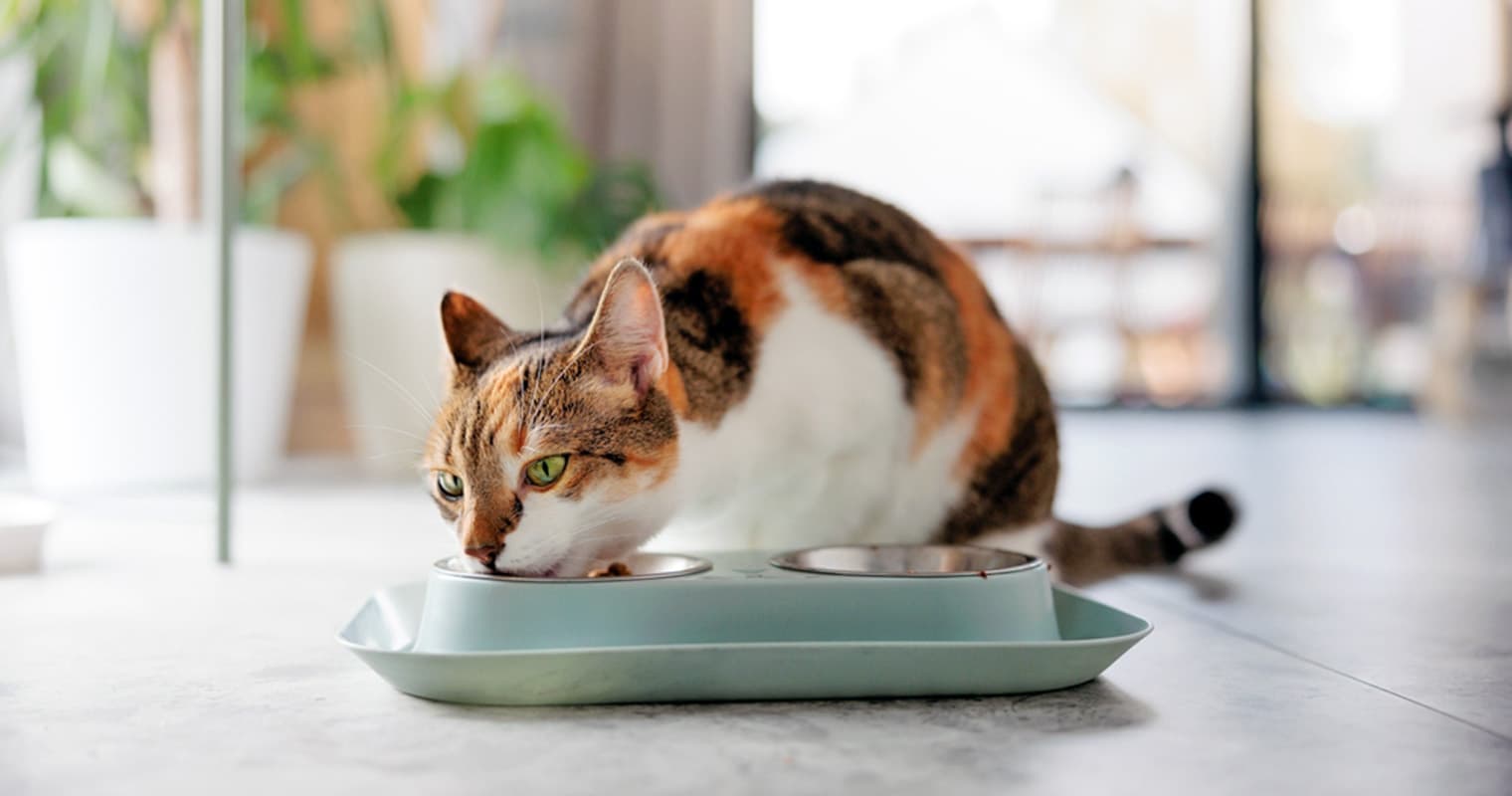
Filip Olejowski / Shutterstock
It’s easy for any pet parent, especially new ones, to get overwhelmed while comparing wet and dry cat food. Dry cat kibble and canned cat pâté or chunks (aka wet food) are the two most popular types of cat food — but which one is better for your cat?
Instead of stressing over which one to choose, you might be surprised to learn that feeding your kitty both is actually the ideal recommendation for many cats. Here’s why: Wet food has a high moisture content to support your cat’s kidney health, while dry food helps keep your cat’s teeth clean. Wet food also prevents dehydration in cats who don't naturally drink much water. Because of the benefits each type of food offers, mixing dry food with wet food offers the best of both worlds when it comes to dietary decisions.
Not all cat foods are created equally, and this is especially true when comparing dry and wet cat foods. The different ingredients and manufacturing methods result in cat foods with varying nutritional benefits, smells, textures, flavors, and costs.
Dry cat food is made by combining ingredients into a mixture that’s cooked using steam, water, and pressure. Once cooked, it is pressed together to make kibble shapes in a process called extrusion. Once the kibble dries, various sprays may be added to increase fat or vitamin content, enhance shelf life, and increase palatability.
Wet cat food is made by combining ingredients and then cooking the food in the can. Depending on the specific type of wet cat food, the gravy, gel, chunks, pate, or other components may need to be cooked separately before combining them. Once the cans are sealed, heat and pressure are used to sterilize the food.
As their names imply, dry cat food has a low moisture level (about 10 percent), while wet food has a high moisture level (about 75 percent).
Different cat foods can have minor variations. But if a food is formulated for a specific life stage, it will have the same essential nutrient ratios as other foods for that same life stage — regardless of whether the food is wet or dry. This is to provide the necessary nutritional components that different cat life stages require. According to the Association of Animal Feed Control Officials (AAFCO), nutrition profiles exist for the following life stages:
Gestation/lactation: For pregnant and nursing cats
Growth: For growing kittens less than one year of age, containing more protein, fat, and calories than adult food
Maintenance: Considered regular food for adult cats
All life stages: Suitable for any age cat, but with different feeding instructions for each of the three life stages
Since cats are obligate carnivores, cat food must contain meat (such as chicken, turkey, beef, lamb, or fish). But it must also contain a variety of vitamins and minerals to meet the nutritional requirements a cat needs. Cat food may also contain cereals and other ingredients, but dry food will contain very little water. In contrast, wet cat foods may contain all the same ingredients that dry cat foods have, but with more water. Some wet foods also have gravy, gel, or other components.
Dry food comes in bags, and can be poured or scooped out to fill your cat’s bowl or automatic feeder. The food can sit out for a day or two without spoiling or requiring refrigeration, and the remaining food in the bag can be stored in an airtight container for several months.
Wet food most commonly comes in cans but can also be purchased in pouches. Once a can or pouch is opened, the food must be used within a few hours or covered and refrigerated for up to three days.
Is dry cat food bad for cats? No, it’s cost-effective, has a long shelf life, and helps keep teeth clean. So it’s no wonder that dry cat food is so popular with many cat parents, even if there are better options for some cats. For example, if your cat is missing teeth, experiencing oral pain, or has issues with their kidney or urinary tract, dry food may not be an ideal choice.
Convenience: Open or closed, bags of dry cat food require no refrigeration and are easy to portion out for meals.
Dental health: The crunchy kibble helps keep teeth clean as your cat chews it.
Less expensive: Most dry cat foods are less expensive compared to wet cat foods.
Cats love the way wet food tastes, and the high moisture content supports their kidneys and urinary tracts. It may not be ideal for every cat and pet parent due to the lack of tooth-cleaning action that kibble provides, the added expense, the wet food’s smell, and its short shelf life once opened. Still, there are many reasons pet parents prefer wet cat food.
Easier to chew: If your cat is missing teeth or has oral pain, wet food is easier and less painful to eat than dry food.
Kidney and urinary tract health: The high moisture content of wet cat food is good for your cat’s kidney and urinary tract health, two bodily systems that are often problematic for cats.
More appetizing: Wet food is naturally smellier and tastier to your cat than dry food, so it is much more appetizing. This is helpful if your cat is a picky eater, needs to gain weight, or isn’t feeling well and needs encouragement to eat.
There are pros and cons to both wet and dry cat foods, but ultimately, you should discuss what to feed your cat with your veterinarian.
When compared to dry food, wet cat food provides superior hydration and helps with kidney and urinary tract health. Does this mean wet food is better for cats? Despite these benefits, wet food does nothing for dental health. Meanwhile, dry food, while having very little moisture, helps keep a cat’s teeth clean, especially when paired with regular brushing.
To get the best of both worlds, you may wonder, “Do cats need wet and dry food?” and the answer is “yes.” Feeding both wet and dry food to your cat is recommended by many veterinarians. To find out the best option for your cat, prepare a list of questions to take with you during your kitty’s annual vet checkup.
Once your kitten is fully weaned, they can eat dry and/or wet kitten food until they are about a year old. Kitten food is specifically formulated for growing cats, so once your kitten reaches 10 to 12 months of age and is fully grown, you should begin to transition them to an adult cat food.
Yes, as soon as a young kitten has all their teeth, they can eat dry food. Make sure a kitten has been properly weaned and transitioned from milk to wet food, and then to dry food.
Once a kitten begins to cut their teeth around three weeks of age, you can begin to offer them wet food in addition to allowing them to nurse or drink kitten formula. Over the course of the next three to five weeks, they can slowly transition from wet to moistened dry food to dry food (as all their teeth come in), or you can keep them on wet food for their entire lives.
Once a kitten has all their teeth, their meal can consist entirely of dry food. They won’t have all their baby teeth until they are about six to eight weeks of age, though, so young kittens should not be solely fed dry food until then. You’ll also need to slowly transition a kitten to dry food if they’ve only ever eaten wet food after nursing or being bottle-fed.
The amount of food that you feed your cat will depend on how active your cat is, what your weight goals are for them, and how calorie-dense the food is. Look at the label on the food and feed them the recommended amount for your cat’s ideal body weight. But keep in mind that this amount is just a guideline. If your cat isn’t meeting their weight goals, you may need to increase or decrease the amount you are feeding them.
“A to Z of Pet Food: 4 Things to Know about Dry Pet Food - Pet Food Institute.” Pet Food Institute, 27 Nov. 2017, www.petfoodinstitute.org/a-to-z-pet-food-4-things-know-dry-pet-food.
“Cats Are Carnivores, so They Should Eat like One.” VMBS News, 22 Mar. 2018, vetmed.tamu.edu/news/pet-talk/cats-are-carnivores-so-they-should-eat-like-one.
Cornell University College of Veterinary Medicine. “Feeding Your Cat.” Cornell University College of Veterinary Medicine, 16 Oct. 2017, www.vet.cornell.edu/departments-centers-and-institutes/cornell-feline-health-center/health-information/feline-health-topics/feeding-your-cat.
“How Pet Food Is Made - Pet Food Institute.” Pet Food Institute, 20 May 2024, www.petfoodinstitute.org/how-pet-food-is-made.
Petreatsmachine.com, 2025, petreatsmachine.com/what-is-extrusion-in-pet-food.
“Selecting the Right Pet Food.” AAFCO, www.aafco.org/consumers/understanding-pet-food/selecting-the-right-pet-food.
“Should I Feed Canned or Dry Food? – Petfoodology.” Tufts.edu, 22 Mar. 2016, sites.tufts.edu/petfoodology/2016/03/22/should-i-feed-canned-or-dry-food.
“Wet vs. Dry Cat Food: Which Is Better?” Purina.com, 2018, www.purina.com/articles/cat/health/nutrition/wet-vs-dry-cat-food.

Adrienne Kruzer is an accomplished veterinary technician and writer with over 15 years of hands-on experience caring for domestic and exotic animals.

Shelters & Rescue

Behavior & Training

Pet Wellness

Behavior & Training
How does indoor and outdoor living affect your cat’s health and happiness? Read on to find out.

Adoption Advice
Although they have a reputation for being independent, cats do still some care and attention.

Adoption Advice
Bringing home a cat? Here’s what you’ll wish you knew sooner.

Adoption Advice
Adopting a new cat? Learn more about how you should introduce your adopted friend to their new home.

Behavior & Training
From diet to health concerns, here’s a guide to how to know for sure, what may be causing this issue in your cat, as well as some potential treatments for it.

Adoption Advice
If you suspect your kitten may be too thin, here are tips on how to know for sure that they’re underweight — and if they are, what you can do to help them.