How to Transition a Cat to New Food
This gradual process will help your kitty avoid digestive and appetite issues.
This gradual process will help your kitty avoid digestive and appetite issues.
by Adrienne A. Kruzer, BBA, RVT, LVT, | September 24, 2025
urryFritz / Adobe Stock
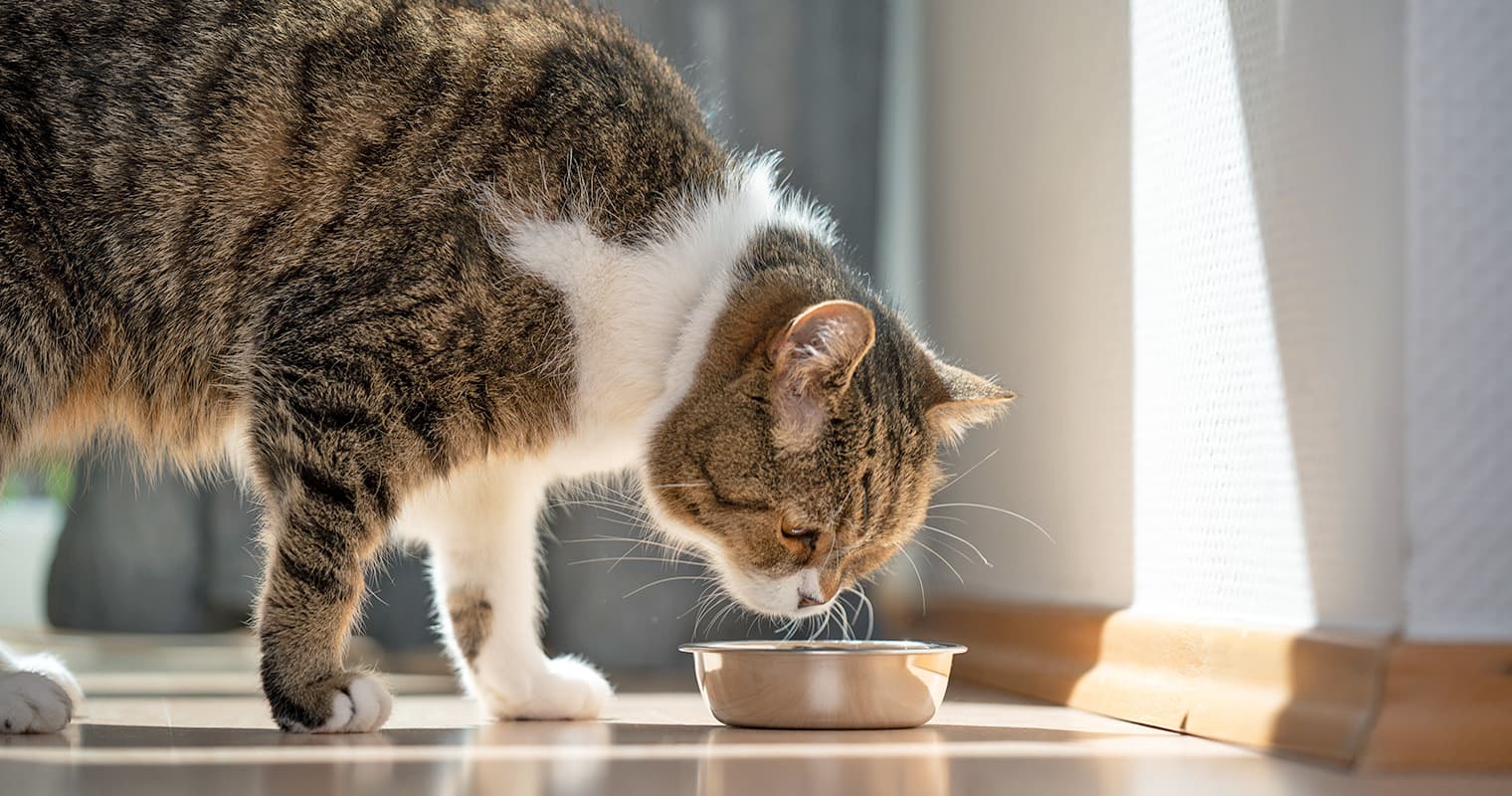
Adopting a new cat or kitten is an exciting time that’s full of changes. Your home, your family, their litter box, their toys, and even their food are all new experiences for your cat — and some changes need to happen more slowly than others. Introducing your cat to a new food is one of those changes that can take some time.
Whether you’re changing your cat’s food due to a new flavor, or it’s time for your kitten to start eating adult food, knowing how to switch a cat’s food properly can help adapt them to the new food and prevent unwanted stomach upset.
TL;DR: Gradually transition a cat to new food over seven to 10 days to avoid digestive upset. Mix increasing amounts of the new food with decreasing amounts of their current food, starting with 75 percent old food and 25 percent new food, then a 50-50 split for a few days, then 25 percent old and 75 percent new for several days, and finally 100 percent new food by day 10.
Your new cat or kitten may not need to change their food right away, but consider adding it to your checklist. It’s only a matter of time before they’ll need to eat something different.
When you adopt a new kitty, you may only have a small amount of food from the shelter, or you may discover that your cat has a food sensitivity or allergy. Your kitten may also be ready to transition to an adult formulation, or you simply want to try out new cat food. As your cat grows, they may require certain dietary changes to manage their weight (or various health concerns), but knowing how long to transition them to new food can make the process much smoother.

Thinking of adopting a cat? Learn more about the costs of pet parenthood.
A slow transition is usually necessary to prevent your cat from getting diarrhea or vomiting from a sudden dietary change, but it is also helpful for finicky cats. Some cats won’t take to a new food flavor, texture, or shape right away, so slowly mixing the old and new food together will help them adjust.
Your vet may also recommend a probiotic during this transitional period to support your cat’s digestive system and decrease GI upset. Start transitioning your cat to a new food by feeding them their old food with just a little of the new food added in. Over the course of a week or two, feed more and more of the new food — with less and less of the old food — until your cat is only eating the new food.
Once you’ve determined which food you are transitioning your cat to, replace 25 percent of each meal with the new food. Do this for a couple of days so your cat can smell and taste the new food. This small amount shouldn’t cause your cat to have any digestive issues when they become curious or hungry enough to eat it.
Now that your cat has tasted the new food, mix the new and old food evenly at each meal. This means that half of your cat’s food will be their old food, and half will be their new food. Be sure to mix them in a bowl, rather than keeping them separated. Aim for increasing the new food by 25 percent and decreasing the old food by 25 percent, for a 50-50 split.
Your cat is getting closer to eating only their new food, but you should still mix in some of the old food with the new food. By day five, 75 percent of your kitty’s meal should be the new food, with only 25 percent being the old food.
You’re in home stretch. If your kitty is doing well with the food transition, eliminate the old food from their meal over the course of the next two days. Do this until you are only feeding them new food. Your cat shouldn’t even notice the change if the transition has gone well.

GI issues are common, but very treatable. Here’s how to help your new dog or cat overcome their stomach problems as they settle into your home.
If your cat has a sensitive stomach, begins to vomit, stops eating, or has diarrhea, you might have changed their food too quickly. During your cat’s food transition, monitor their appetite and poop consistency, and watch for any vomiting. If you notice changes in their appetite or poop, or they begin to vomit, decrease the amount of new food you are giving them until the symptoms subside. If the symptoms do not resolve or worsen after a couple of days, contact your veterinarian.
Some cats can be picky eaters. While caring for your new cat, you may find they are one of them. This can complicate your food transition plan if they decide not to eat the new food. Thankfully, there are a few ways to address a finicky eater as you transition them to a new diet.
Some cats are reluctant to try new dry food due to the flavor, texture, or shape of the kibble, so you may need to add something extra tasty to their food. If your cat normally eats dry food, try mixing some wet food into the kibble to entice them with a special meal. Be careful not to add too much wet food, or your cat may only lick the wet food off the kibble or get GI upset.
Aim to simply coat the dry kibble with the wet food by mixing it together rather than putting a spoonful of wet food on top of the kibble. This way, your cat will be enticed by the wet-food smell, but they have to eat each piece of kibble in order to taste it.
Aside from wet food, different food enhancers can add extra flavor to your cat’s food. These may come in powder, paste, gel, liquid, spray, or gravy forms. A variety of flavors are available, so you can find one your cat enjoys. Add the enhancer to your cat’s food as needed, as you go through this transitional period.
Ten days may not be enough time for a picky eater. If your cat is only eating their old food and leaving the new food in their bowl during the transitional period, try slowing things down. Decrease how much new food you’re adding to the mix, and extend the transition period to 14 or even 21 days, if that’s what it takes.
Some foods, such as those in low-fat or therapeutic diets, aren’t very tasty. If you’ve run out of options and your cat refuses to eat, let your vet know. They may be able to suggest an alternative that is still ideal for your cat’s needs, but that they will be more likely to eat.
Kittens and adult cats have different nutritional needs. When your kitten reaches about one year of age, this is when you should gradually switch them from kitten to cat food. Pay special attention to how much kitten food you have left before you feed it all to them, so you can be sure to have enough food to last through this transition period. Start by mixing more of the existing food with a little of the new food, then gradually increase the proportion of new food, until that’s all they’re eating. You should do this over about 10 days.
Dry cat food contains very little moisture but is an easy, inexpensive option for pet owners. Wet food, on the other hand, has a high moisture content, but pet owners often complain that it can be stinky and costs more. Despite this, wet food is recommended for many cats. Transitioning your cat from dry to wet food is not difficult, but should still be done slowly. Vomiting and diarrhea are not uncommon when you begin feeding a cat food with higher moisture content, so transition from dry to wet food over the course of at least a week, by slowly replacing a portion of the dry food with wet food at each meal.
Cornell University College of Veterinary Medicine. “Feeding Your Cat.” Cornell University College of Veterinary Medicine, 16 Oct. 2017, www.vet.cornell.edu/departments-centers-and-institutes/cornell-feline-health-center/health-information/feline-health-topics/feeding-your-cat.
“Evaluating Pet Food.” Veterinary Hospital, 2025, hospital.cvm.ncsu.edu/services/small-animals/nutrition/evaluating-pet-food.
“Switching from Kitten Food to Cat Food: When & How to Do It | Chewy.” Chewy, 2025, www.chewy.com/education/cat/food-and-nutrition/switch-kitten-food.
“What Are Prebiotics and Probiotics and How Can They Help Your Cat? | Chewy.” Chewy, 2025, www.chewy.com/education/cat/food-and-nutrition/probiotic-prebiotic-treats-cats.

Adrienne Kruzer is an accomplished veterinary technician and writer with over 15 years of hands-on experience caring for domestic and exotic animals.

Adoption Advice

Adoption Advice

Behavior & Training

Pet Wellness
The thought of trying to brush your cat’s teeth may seem daunting. But keeping their teeth clean is more important than you may think.
Adoption Advice
If you suspect your kitten may be too thin, here are tips on how to know for sure that they’re underweight — and if they are, what you can do to help them.

Adoption Advice
Ready to welcome a new feline friend? Here’s how to make sure your home is ready for their arrival.

Shelters & Rescue
Having financial issues doesn’t mean you have to give up your pet. Here’s how to get help.
Adoption Advice
Stressed about raising your kitten? This National Kitten Day, we’ve got you covered with everything you need to raise a happy, healthy cat.
Adoption Advice
Thinking about adding another cat to your home? Here’s how to expand your family, minus the drama.