Dogs with Naturally Short Tails—and Why They’re Built That Way
Why certain breeds have docked tails, while others just have naturally short tails.
Why certain breeds have docked tails, while others just have naturally short tails.
by Jackie Brown, | January 12, 2026
Alexandrena Parker / Stocksy
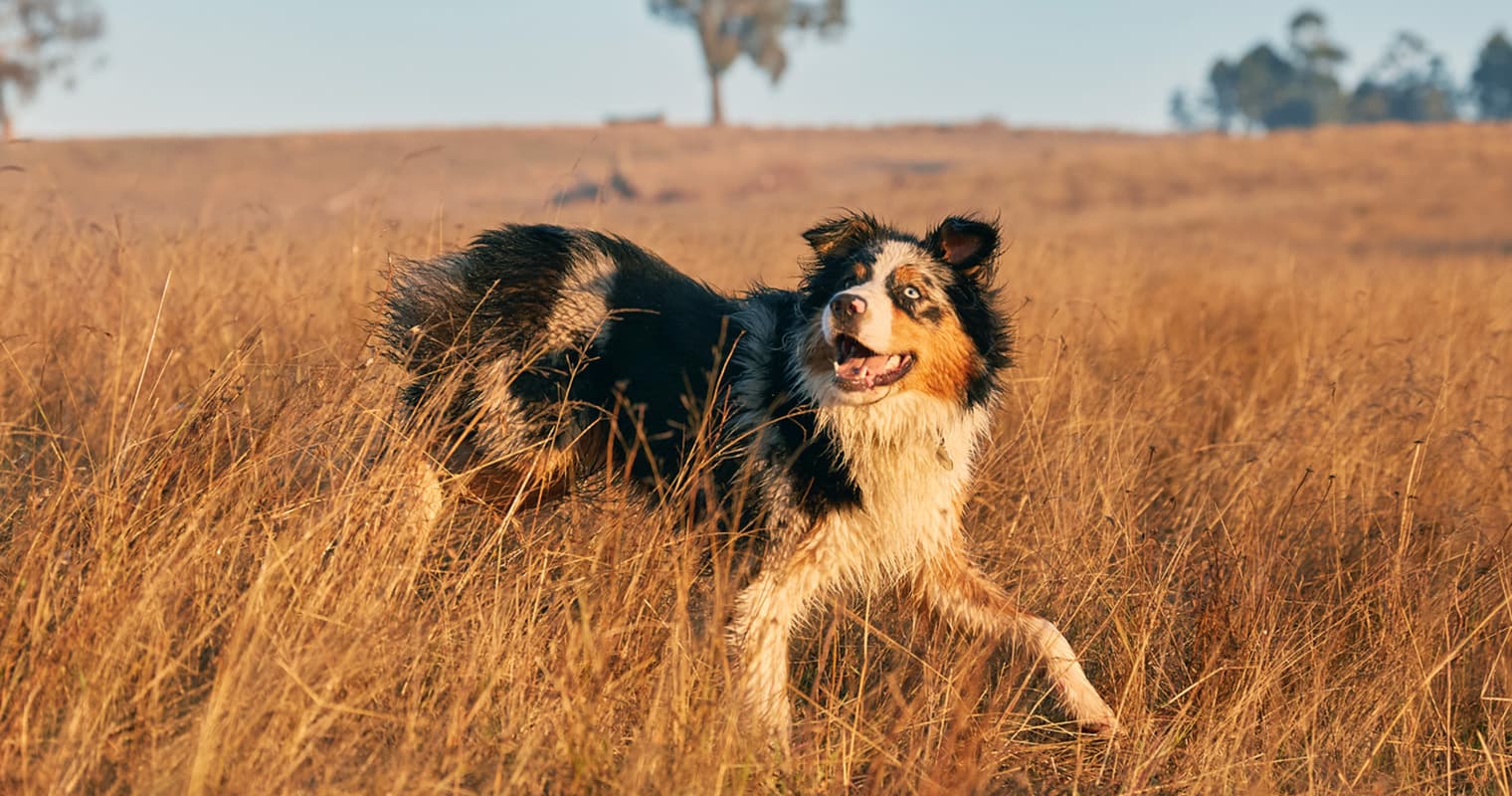
There’s a lot to love about dogs with short tails. Of course, dogs with short tails simply look adorable, especially when they wag their entire rear end in excitement. But another bonus of having a dog with a bobtail — or no tail — is that there’s nothing to sweep around the house. There’s no knocking items off the coffee tables or accidentally whacking a young child in the face. Dogs with short tails also rarely suffer from tail injuries and pick up fewer burrs, mud, and other debris while playing outdoors.
Tail length is determined primarily by genetics. In certain breeds, such as Australian Shepherds, Pembroke Welsh Corgis, and Brittanys, a dominant T-box gene mutation produces natural bobtails. In fact, of the twenty-three breeds identified with natural bobtails, seventeen were linked to a T-box mutation. In other breeds, such as Bulldogs and Boston Terriers, short tails result from different genes or combinations that affect vertebral development; in either case, some of these puppies are born with short or no tails.
In breeds with the T-box gene mutation (bobtail gene), such as the Australian Shepherd and Pembroke Welsh Corgi, some puppies are born with no tail. Some are born with short tails. And some are actually born with full tails. Here’s how it works:
When one parent carries a single copy of the bobtail gene and the other does not, about half of the puppies are born with naturally short tails, while the other half have normal-length tails.
If both parents carry the gene, some pups may inherit two copies of the gene (and typically do not survive to birth), others may have short tails, and some may be born with normal-length tails.

With their squishy, adorable faces and gentle dispositions, these Bulldog mixes can make amazing family pets.
Some breeds have short tails only because puppies’ natural tails are “docked” a few days after birth. Docking is another word for amputating: Part of the tail is removed by a veterinarian (or a breeder) using surgical scissors or a scalpel. Sometimes a tight rubber band is placed around the end of the tail, cutting off circulation — eventually, the end of the tail “dies” and falls off.
Historically, the practice of docking was used for working breeds to reduce tail injuries, but it is not medically necessary and is banned or partially banned in many parts of the world. Although docking is still legal in the United States, the American Veterinary Medical Association and many other animal welfare organizations oppose cosmetic docking. Examples of breeds who often have docked tails include Doberman Pinschers, German Shorthaired Pointers, and Miniature Schnauzers.
Let’s meet some breeds known for naturally short tails.
everydoghasastory / Shutterstock
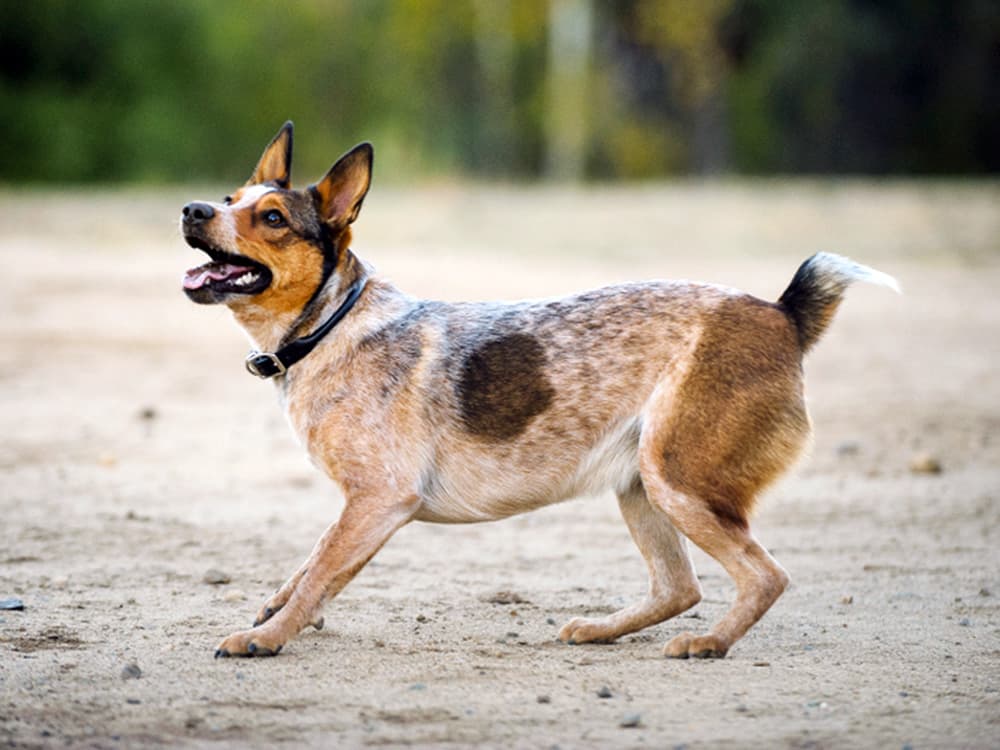
Australian Stumpy Tail Cattle Dog, who looks a lot like a bobtailed Australian Cattle Dog, is a genetically separate breed with a naturally short tail (less than four inches long). Australian Stumpy Tail Cattle Dogs are extremely rare, especially outside of Australia.
Height: 17 to 20 inches
Weight: 32 to 45 pounds
Eudyptula / AdobeStock
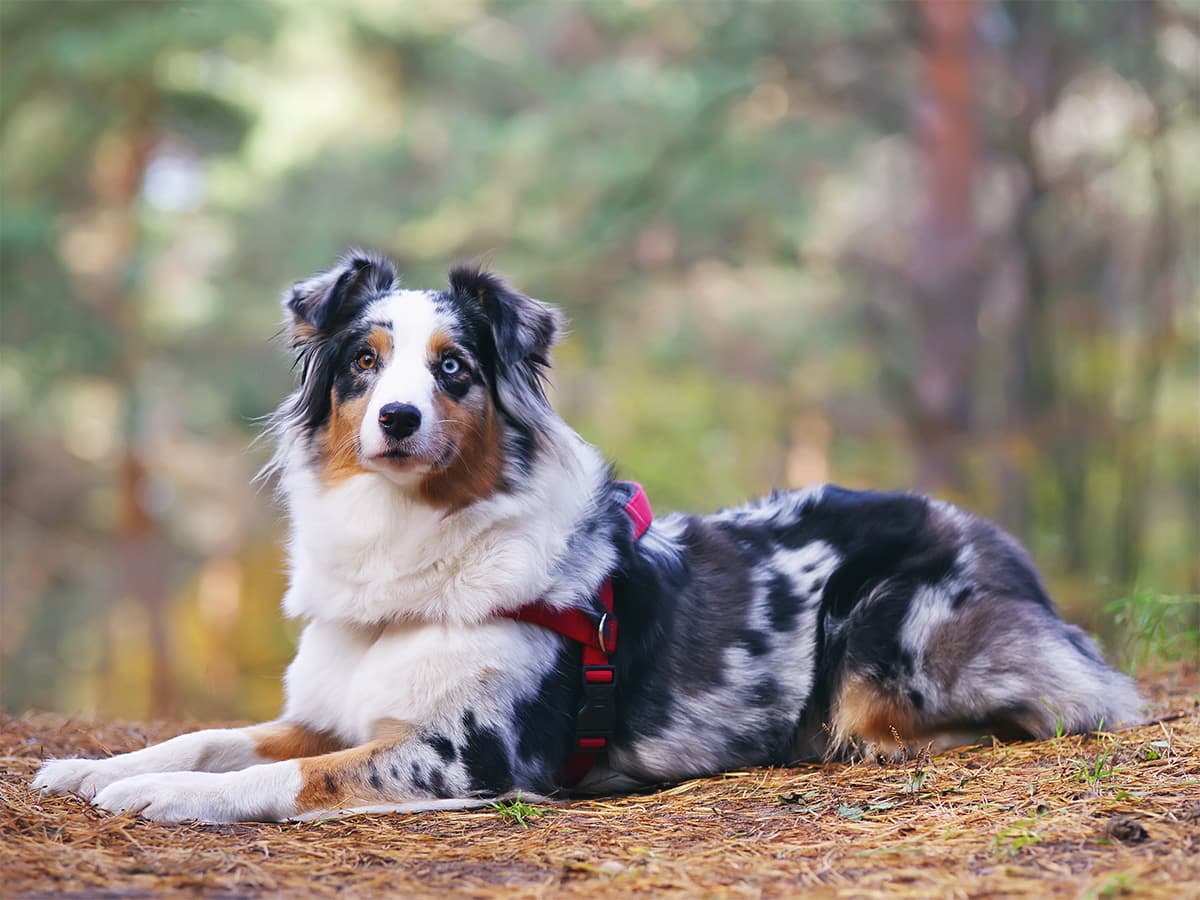
The Australian Shepherd is a herding breed developed in the United States. Aussies are popular family dogs and excellent dog-sport competitors. Most Aussie puppies are born with longer tails (traditionally docked due to their working heritage), but about 20 percent of Australian Shepherd puppies are born with a bobtail or short tail.
Height: 18 to 23 inches
Weight: 38 to 66 pounds

Nadezhda Zaitceva / Adobe Stock
Pembroke Welsh Corgis were developed in Wales, where they were used to herd cattle. Although most Pembroke Welsh Corgis have their tails docked as short as possible, some puppies are born with no tail or a short tail (the breed standard allows for a tail up to two inches long).
Height: 10 to 12 inches
Weight: 18 to 42 pounds
Tanya Tanya / AdobeStock
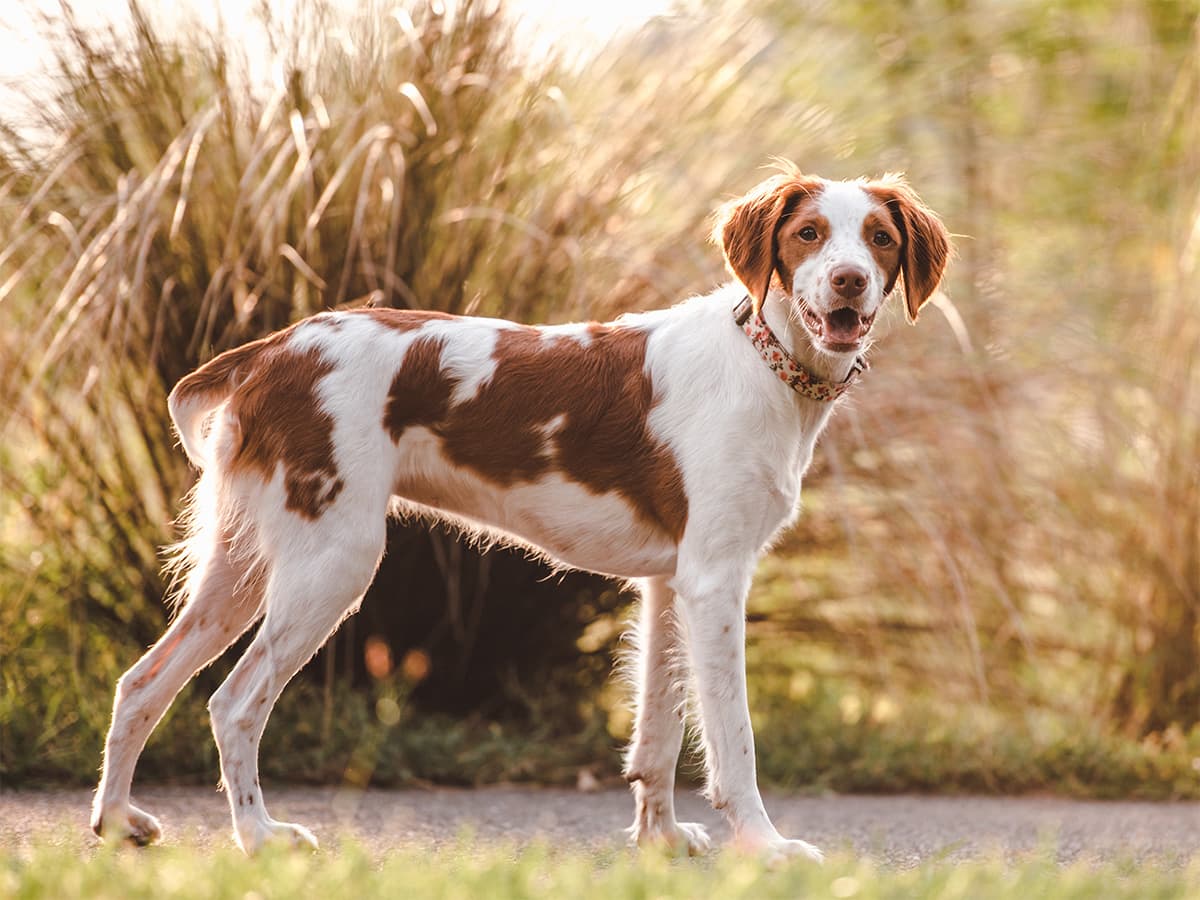
The Brittany is a French sporting breed used for bird hunting. Although most Brittanys are born with long tails, the breed carries the bobtail gene, so a few are born tailless or with short tails.
Height: 18 to 19 inches
Weight: 27 to 50 pounds
Lazy_Bear / AdobeStock
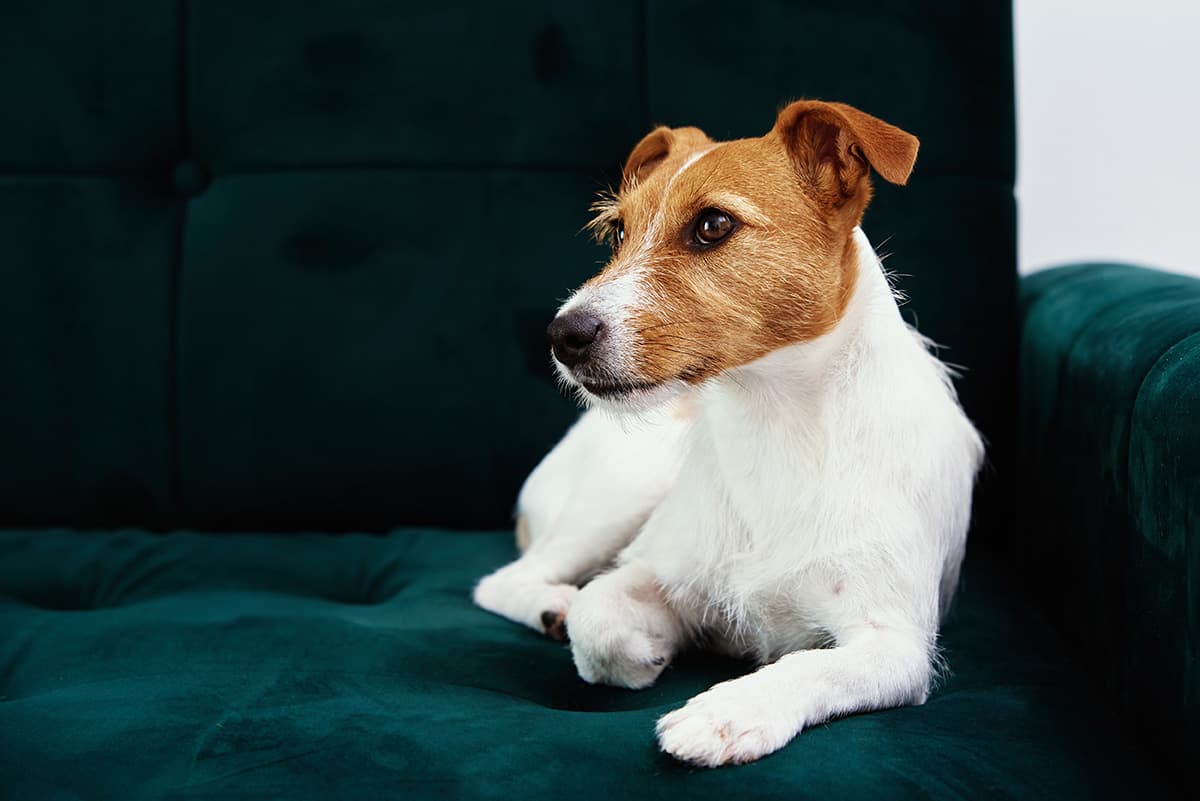
Jack Russell Terriers were developed in England by Reverend John “Jack” Russell for fox hunting. Their tails were traditionally docked to a shorter length so hunters could pull the dogs out of underground dens by the tail. Today, some Jack Russells are born with shorter tails (called “stumpy”), but many have natural long tails.
Height: 10 to 15 inches
Weight: 12 to 24 pounds

Jeannette1980 / Pixabay
Parson Russell Terriers have shared ancestry with Jack Russell Terriers. The two breeds are similar, but Parsons are taller with a more square body. Their tails were historically docked for the same reason — fox hunting — but some Parsons are born with short tails.
Height: 11 to 15 inches
Weight: 11 to 23 pounds
romaset / AdobeStock
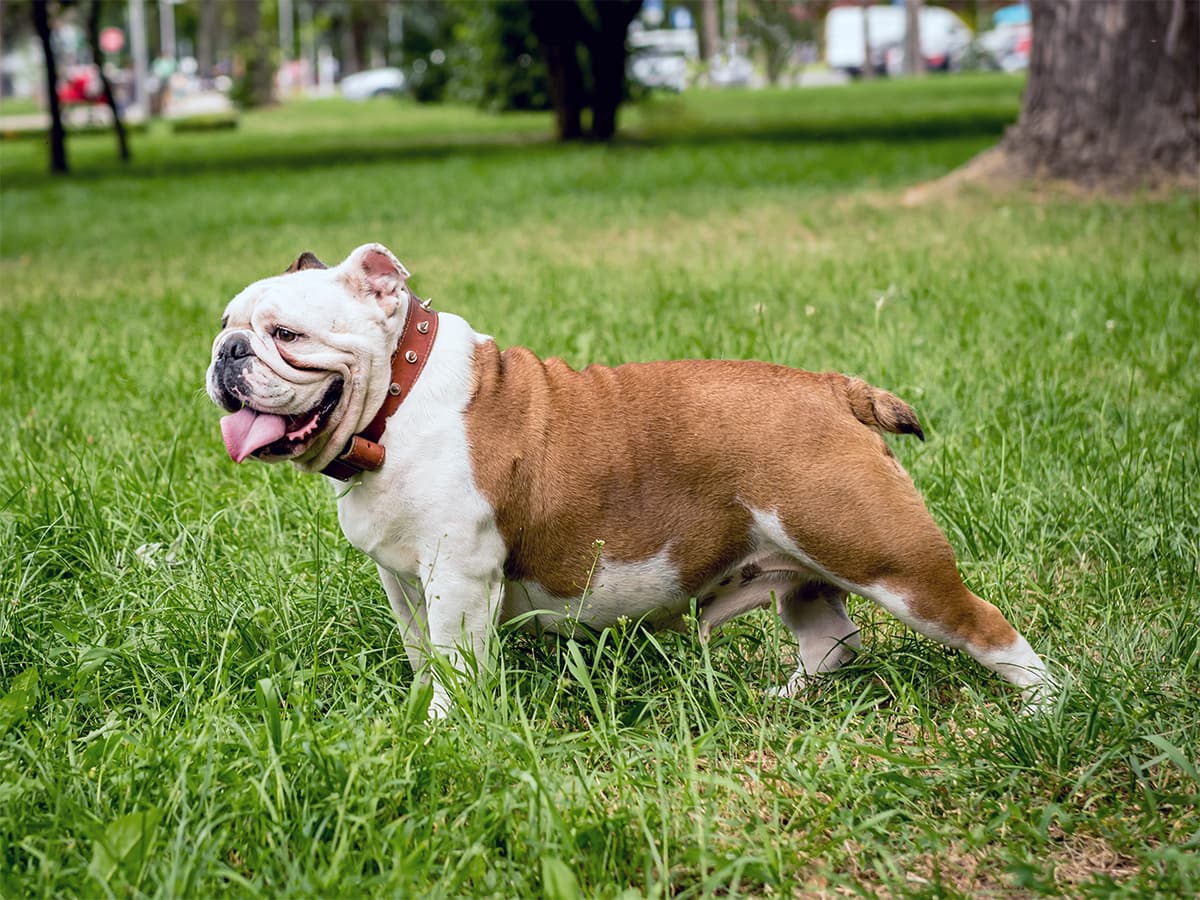
The ancestors of the Bulldog (sometimes referred to as the English Bulldog) were used for bullfighting in England hundreds of years ago. But today’s Bulldog is a gentle, sweet-natured companion. All Bulldogs have very short tails that are sometimes “screwed” (kinked rather than straight). Their short tails are the result of genes that have affected the development of the spine, and by extension, the tail.
Height: 12 to 16 inches
Weight: 32 to 68 pounds
Lysikova Irina / Shutterstock
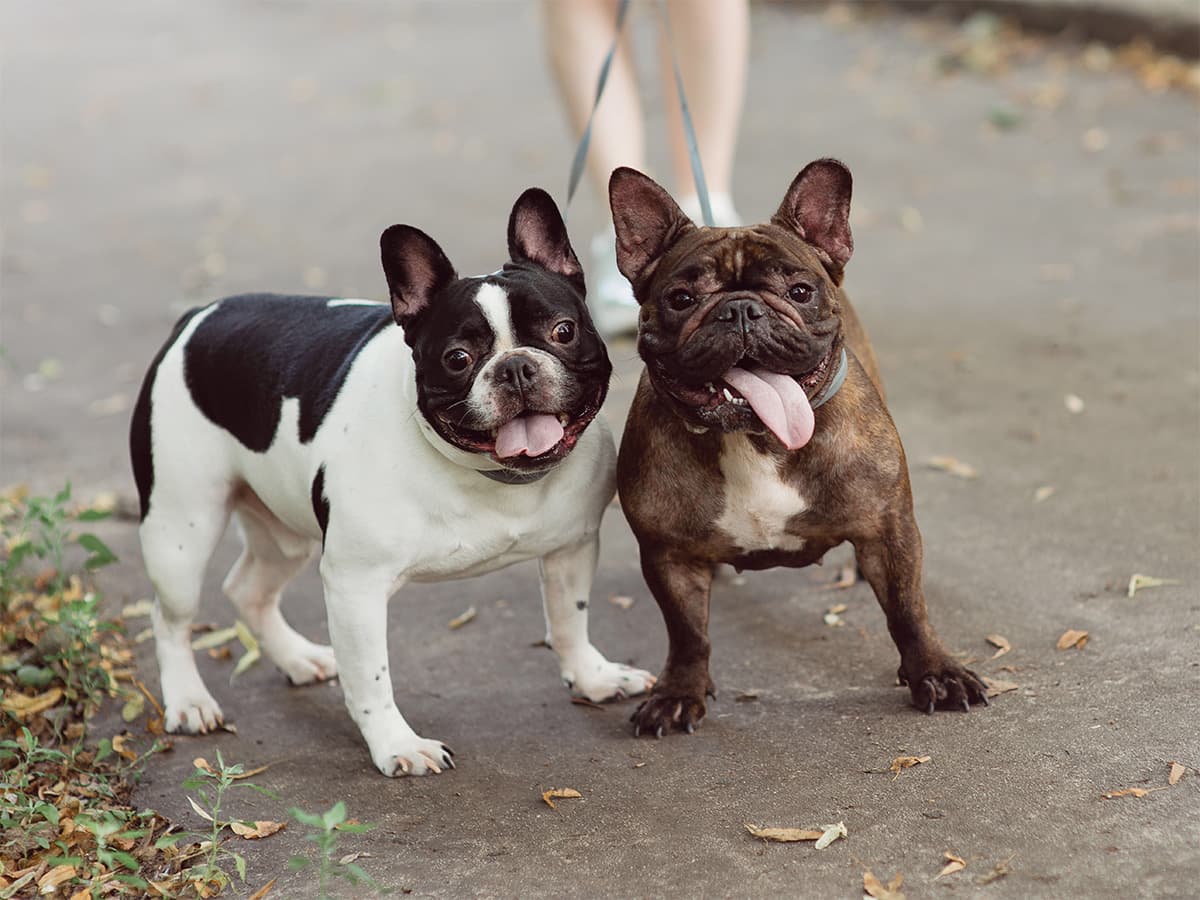
French Bulldogs were developed in France using small, toy-sized Bulldogs from England. Although French Bulldogs are not precisely miniature versions of Bulldogs, the two breeds share ancestry, so they have many similarities — including a naturally short tail, which can be straight or screwed.
Height: 12 to 13 inches
Weight: 19 to 34 pounds

Erik Mclean / Pexels
The foundation dog for the Boston Terrier breed was a puppy named Judge, who was a cross between a Bulldog and a white English Terrier (a breed who’s now extinct). As a result, the Boston Terrier’s tail is much like the Bulldog’s: naturally short and either straight or screwed.
Height: 14 to 16 inches
Weight: 15 to 29 pounds

Jaroslav Machacek / AdobeStock
The Schipperke originated in Belgium, where the little black dogs were kept on ships to act as rat exterminators. Most Schipperkes are docked, but the breed does carry the natural bobtail gene mutation, so some puppies are born with no tails or short tails.
Height: 9 to 14 inches
Weight: 9 to 19 pounds
The natural bobtail gene, found in several breeds, carries some health risks. Dogs with one copy of the gene have a slightly increased risk of having vertebral abnormalities, which could cause back problems or spinal issues. However, these cases are rare. Most dogs with natural bobtails are healthy.
That said, two natural bobtail dogs should never be bred together. That’s because the puppies who inherit two copies of the gene mutation (about 25 percent of the litter, statistically) will die before they are born.
Tail-docking is a controversial practice. Those opposed say docking is mutilation and negatively impacts a dog’s natural ability to move, balance, and communicate with other dogs.
Bulldogs, French Bulldogs, and Boston Terriers can sometimes develop skin irritations or infections if their short tail presses closely to their skin, trapping moisture. Make it a habit to regularly inspect the tail and the area under the tail to make sure it stays clean and dry. Some very fluffy dogs with short tails might need their hair trimmed to prevent fecal matter from building up. Your groomer or vet can do this “sanitary trim” for you.
Dog breeds without tails include the Australian Shepherd, Pembroke Welsh Corgi, Schipperke, and Australian Stumpy Tail Cattle Dog. In these breeds, some puppies are born with no tails, and others have their tails docked a few days after birth.
Some dogs are born with natural bobtails (no tail, or a very short tail). Docking refers to tail amputation, the practice of surgically removing all or part of a puppy’s tail shortly after birth.
Short tails in dogs can be genetic (they are born that way) or due to docking (amputating all or part of the tail a few days after birth).
Yes, bobtail dogs are rare. Even in breeds who carry the natural bobtail gene mutation, only a small percentage of puppies will be born with natural bobtails.
A stumpy tail is classified differently in different breeds. But generally, a stumpy tail is anywhere from one to four inches long.
American Kennel Club. “American Kennel Club.” American Kennel Club, 6 Nov. 2017, www.akc.org/dog-breeds/pembroke-welsh-corgi.
“Australian Stumpy Tail Cattle Dog.” American Kennel Club, 14 Mar. 2024, www.akc.org/dog-breeds/australian-stumpy-tail-cattle-dog.
“Bulldogs’ Screw Tails Linked to Human Genetic Disease.” University of California, 4 Jan. 2019, www.universityofcalifornia.edu/news/bulldogs-screw-tails-linked-human-genetic-disease.
Indrebø, Astrid, et al. A Study of Inherited Short Tail and Taillessness in Pembroke Welsh Corgi. no. 5, May 2008, pp. 220–24, doi.org/10.1111/j.1748-5827.2007.00435.x.
“Natural Bobtail | Veterinary Genetics Laboratory.” Vgl.ucdavis.edu, vgl.ucdavis.edu/test/natural-bobtail.
“Pembroke Welsh Corgi Archives.” Showsight Magazine, 2025, showsightmagazine.com/dog-breeds/pembroke-welsh-corgi.
Yoo, DongAhn, et al. “The Genetic Origin of Short Tail in Endangered Korean Dog, DongGyeongi.” Scientific Reports, vol. 7, no. 1, Aug. 2017, doi.org/10.1038/s41598-017-10106-6.
Name of. “General Health Information | the Schipperke Club.” Schipperkeclub.co.uk, 2025, www.schipperkeclub.co.uk/schipperke-health/general-health-information/. Accessed 16 Dec. 2025.

Jackie Brown lives in sunny Orange County, CA, where she works as a freelance writer and editor. When she’s not on deadline, you can find her paddling her outrigger canoe in the Pacific Ocean or hiking in the foothills with her miniature poodle and two young boys.
Breed Info

Breed Info

Breed Info

Breed Info
It’s time to separate fact from fiction when it comes to white Boxers’ temperament and health.
Breed Info
From their temperaments to needs, we help you weigh the differences between these two exceptional breeds (and breed mixes).

Pet Wellness
From eye infections to breathing problems, here are health issues you should know about before adopting a French Bulldog.
Breed Info
Energetic and eager to please, this pup can be a dream dog for an active family.

Behavior & Training
These training resources keep costs low and results high.

Adoption Advice
What sounds like a great idea can quickly go south if you aren’t fully prepared to adopt a puppy.