Choosing High-Value Treats For Dogs
Curious which treats to leverage to make training more rewarding for your dog? Here are some recommendations.
Curious which treats to leverage to make training more rewarding for your dog? Here are some recommendations.
by Colleen Stinchcombe, expert review by Sean Prichard, CCFC | February 2, 2026
Simone Wave / Stocksy
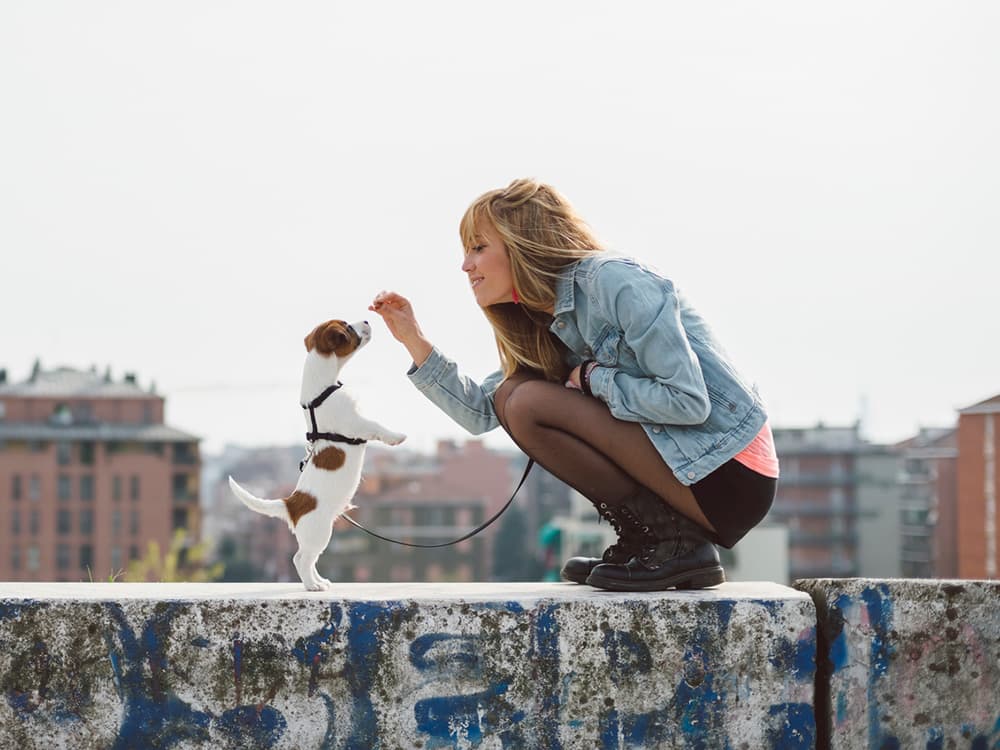
Think of the things you do for that perfect cup of coffee — like walking entirely out of your way on your morning commute to the one barista who has mastered your latte. So just imagine what tricks you can inspire your puppy to learn with just the right reward. There’s a reason why “food motivated” is a term you’ve probably heard vets and trainers use. Praise and belly rubs are great, to be sure, but nothing beats treats. That said, it’s not as simple as dangling a carrot. Certified dog behaviorist Lauren Novack breaks down how to pick the perfect dog training treat. Shop our top picks below.
The point of a training treat is to motivate your puppy to give you their undivided attention, so it makes sense that the treat should be more desirable to your dog than any other stimuli (squirrels, shoes, other puppies). If your pup is very food motivated, then this is an easy one. But some can be picky eaters, in which case you’ll need to up the ante. Novack suggests categorizing treats into three categories: low, medium, and high value.
When working on a dog-training skill that your dog knows pretty well, go for low-value treats. Low-value treats can be your dog’s kibble. “They eat it a lot already, and while it tastes good, it’s only going to be motivating in reinforcing behaviors they’ve already got down pretty well,” Novack says. Because treats should make up no more than 10 percent of your dog’s daily calories, this option is best for dogs who will eat anything and dogs who are watching their weight because kibble is lower in calories than most treats.

The key to curbing mindless snacking — this is for your dog.
Medium-value treats are a step up. From classic crunchy dog biscuits to healthy snacks, such as apple slices and baby carrots, medium-value treats are great for training when your dog needs a little extra encouragement, or just to mix it up. You’d be hard-pressed to find a dog who would turn one down; they just may not do backflips for it.
But when training your dog to perform a new skill, you need to pull out all the stops. Small, strong-smelling, easily-served high-value rewards are the best dog training treats. High-value treats are generally meaty…and stinky. They should make your dog drool. Dogs experience the world through their noses — 33 percent of a dog’s brain is dedicated to interpreting odors — so the smellier the treat, the better.
Flavors like bacon and venison are particularly pungent and covetable. As a rule, dog training treats should be pea-sized and easily portable, so they don’t take your dog ages to chew (or crumble up in your pocket). But if your dog is prone to distraction, you’ll have better luck with human snacks like hot dogs or cheese.
“Dog parents and trainers need to find a balance between high-value treats while also being conscious of the dog’s health,” says Sean Prichard, canine fitness coach and president of Pant & Wag. “Many treats are void of nutrition and loaded with calories and sugar, which is detrimental to a dog’s fitness level.” In some cases, however, it’s OK to reward your dog with a salty, delicious, and calorie-laden human treat, like a hot dog.
Here’s your guide to how treats can help as your new pup is learning all the things.
“If you have a dog who’s overly excited, wants to greet everyone, and you’re fighting to get their attention, then yeah, you should try hot dogs — break them up before a training session so you’ve got small pieces on hand,” Novack says. “And remember, just like us, dogs tire of the same treats if they’re given often enough. The more variety you can provide your pup, the more interested they will be in learning new things.”
While pea-sized pieces of hot dogs, cheese, liver and dried chicken hearts (a fave of dog behavior consultant Ali Smith, founder of Rebarkable) make good high-value treats, you can also order a supply of ready-made, mouth-watering (for your pup, that is) treats to save yourself some prepping and chopping time. Below, you’ll find some of the best dog-training treats with proven results.
Does your pup have tummy trouble? Not to worry. There are many training treats for dogs with sensitive stomachs. Look for treats that are free of grains, gluten, and other ingredients likely to upset your dog’s digestive tract. Read the label to make sure the treats don’t contain anything you know spells trouble for your dog — just because a product is labeled as being suitable for sensitive stomachs doesn’t mean it will work for every pup (though it’s a good start).
While treats are certainly a huge help with training, they’re best used in combination with other methods. “Treats should be just one tool in your training toolbox,” Prichard says. “A well-rounded training approach includes a mix of positive reinforcement, including treats and verbal praise, exercise, and socialization.”
“For food-motivated dogs, the easiest and best reward is usually a treat,” Prichard says. If you don’t want to use store-bought treats, that’s fine of course — you can chop up hot dogs, cheese, or other meats into pea-sized portions, or try your hand at making homemade dog treats for training.
Headed to the park with your pup for a training session and don’t want to put dog treats directly in your pocket? Instead of using a sandwich bag or hauling the whole container of treats along with you, pick up a treat pouch for dog training. Designed specifically for this purpose, some will also hold poop bags, making them a must-bring on all your dog walks.
Absolutely. Plenty of recipes for homemade dog treats exist, including this one from chef Dan Churchill that calls for just three ingredients: dates, oats, and peanut butter.

Colleen Stinchcombe lives near Seattle, WA, where she works as a writer, editor, and content strategist. Her two rescue pups wish she were a professional ball-thrower.

