Whisker Fatigue — Apparently It’s a Thing
Or, is it a genius marketing ploy to get you to buy fancy “whisker friendly” cat bowls? We asked a vet...
Or, is it a genius marketing ploy to get you to buy fancy “whisker friendly” cat bowls? We asked a vet...
by Jackie Brown, expert review by Dr. Maria Zayas, DVM | September 4, 2026
Cameron Whitman / Stocksy
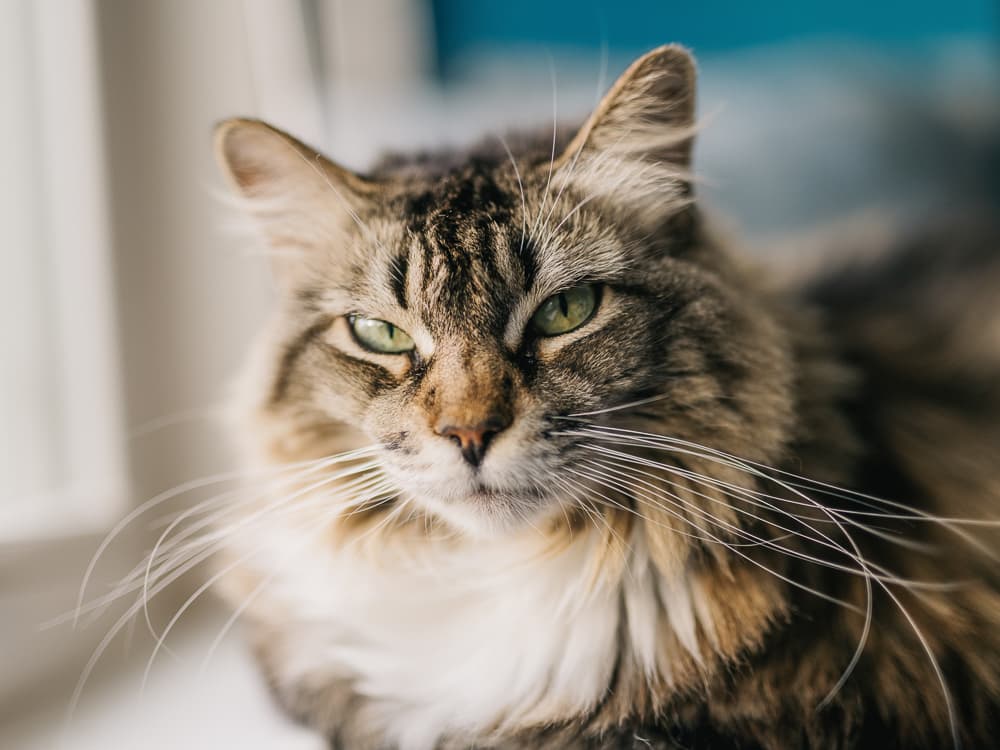
As cat parents, we know that our cats contain multitudes. For instance, my cat will gladly go through hell and high water in order to lick the three drops of liquid hanging off a freshly washed steak knife. However, he would also rather die of dehydration than drink the safe water out of a regular bowl that contains zero knives.
At first, I chalked this up to typical cat chaos — until I started researching cat bowls. Turns out, there’s a lot of reasons a cat might avoid eating or drinking from their bowl. In fact, they are essential factors in keeping your cat healthy and happy while eating and drinking, especially if they live with whisker fatigue.
We talked to cat behaviorist Dr. Mikel Delgado and veterinarian Dr. Gary Weitzman to get to the bottom of it.
bravissimos / AdobeStock
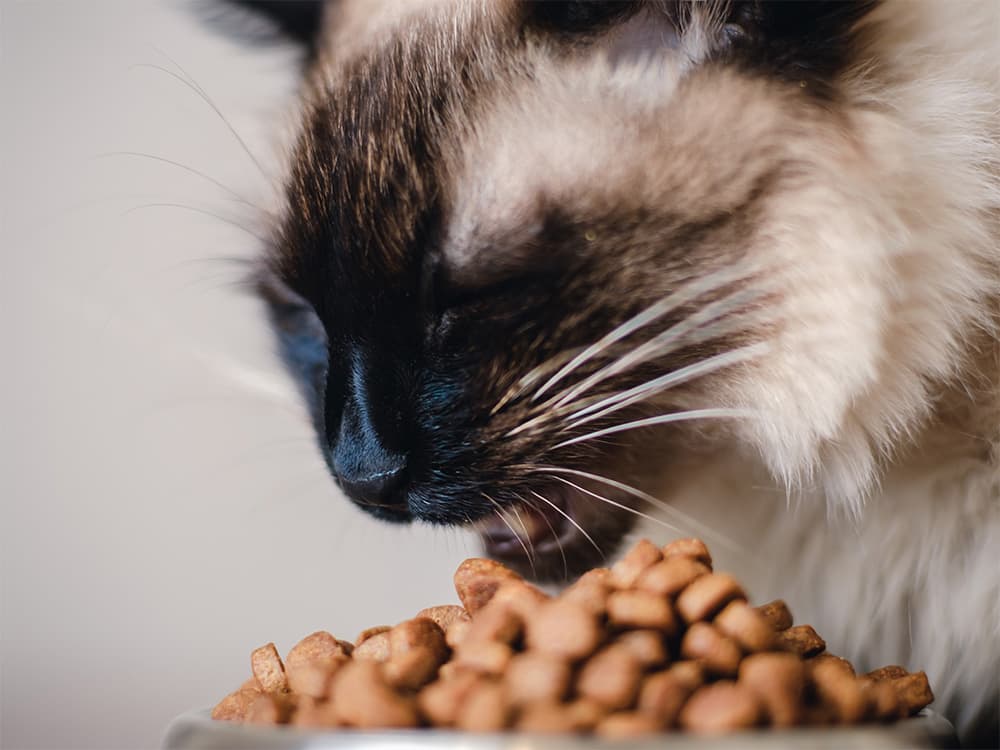
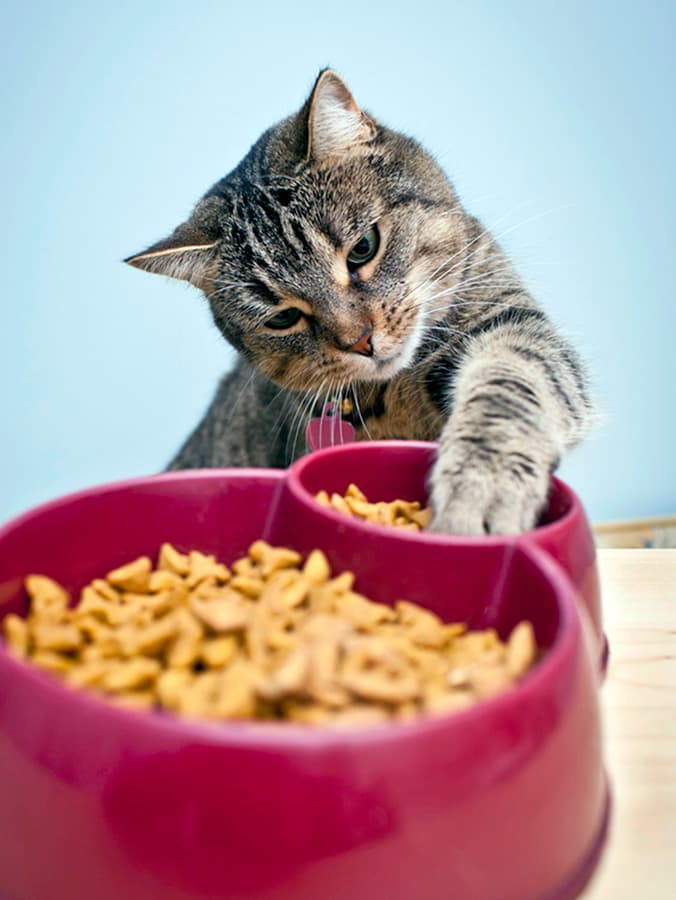
Whisker fatigue, also known as whisker stress, is a newly described phenomenon that refers to the overstimulation a cat experiences when their whiskers brush up against the sides of a narrow or deep bowl. Basically, it’s the feline equivalent of the sensory overload you may experience in a loud, crowded, or chaotic environment. Turns out this unpleasant sensation can cause stress and discomfort, which can lead to cats not drinking water or eating, not eating or drinking entirely, or pawing at their food and water, spilling it onto the floor.
To be clear, veterinary professionals don’t all agree that whisker fatigue is real — some think it’s a clever marketing ploy to sell “whisker friendly” cat bowls that are wider and shallower than traditional pet bowls. A recent study found no support for the theory of whisker stress, though some of the study cats did seem to prefer the whisker-friendly dishes — go figure. This is not to say that whisker fatigue or whisker stress does not exist. A cat’s whiskers are extremely sensitive. These thick, hollow structures are deeply embedded into nerve-filled follicles under the skin.
“From an anatomic and physiologic perspective, it’s entirely possible for overstimulation of a cat’s whiskers to cause problems,” says Dr. Gary Weitzman, DVM, CEO of the San Diego Humane Society, and author of the National Geographic Complete Guide to Pet Health, Behavior, and Happiness: The Veterinarian’s Approach to At-Home Animal Care (2019). “Each time a cat’s whiskers encounter an object or detect movement, a signal is sent to the brain. In the case of too many signals or messages coming in all at once, the brain could experience information overload which could be stressful for a cat.”
Try to avoid touching your cat’s sensitive whiskers. “It may be tempting when you are petting a cat, but it’s best not to touch them,” Dr. Weitzman adds. “And whatever you do, never trim your cat’s whiskers. Cats need them for their expressions, perceptions, orientation, safety, and general well-being.”
Because whisker fatigue isn’t an established medical condition, there’s no official symptom checklist — and many signs are quite common in other health issues.
One sign to pay attention to: Does your cat hesitate, paw at, or avoid a bowl specifically when their whiskers brush the sides — but eat or drink just fine from something wider or shallower?
It’s important to schedule a visit with your veterinarian any time a cat stops eating or drinking because it can be a sign of a serious medical issue. Lots of illnesses and injuries can cause a cat to stop eating or drinking, so always have your cat checked out instead of assuming it’s a behavioral issue. If your cat gets a clean bill of health from the vet, the food bowl avoidance could be due to whisker fatigue.
Rob and Julia Campbell / Stocksy
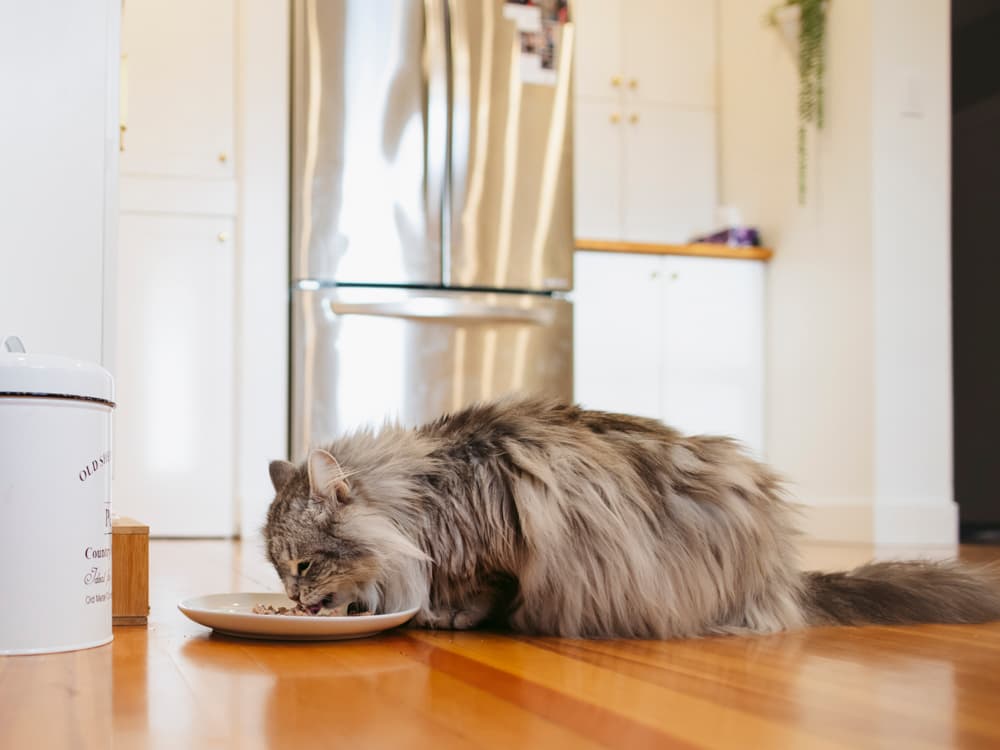
If whisker fatigue seems to be the culprit, the fix is simple: Replace your cat’s narrow, deep food and water bowls with something flat or wide and shallow so your cat’s whiskers don’t touch the sides of the dish.
But whiskers aren’t the only reason a cat might be picky. If a wider dish isn’t cutting it, your cat could also be experiencing spinal pain if their bowl is too low to the floor. Especially for older cats, an elevated bowl can make all the difference. Whatever the case, Delgado recommends experimenting to try to please your cat’s fickle nature: “If you’re not sure, try a few different sizes or styles of bowls and see if your cat seems OK with them.”
Although you can buy special “whisker friendly” cat bowls, you can also try a flat dinner plate from your own collection or even a disposable paper plate. “Some cats may prefer a wider, shallow dish; your cat’s bowl does not have to be a bowl, especially if you feed wet food,” Delgado says.
“Cats also love lip-less, flowing water sources,” says Dr. Weitzman. “There are automatic cat water fountains for purchase that are really fantastic.”
Bowls made from stainless steel instead of porous materials like plastic are more easily disinfected and help prevent issues like chin acne, so grab a metal bowl or dish for your cat when able.
Once you’ve landed on the right bowl, keeping your cat actually using it comes down to upkeep. The one non-negotiable is the cleanliness factor — which is why Dr. Delgado recommends stocking up. “I recommend having several cat bowls because your food dishes should be washed daily, whether your cat eats wet or dry food. If you have several you can rotate through, it is much easier to give your cat a clean dish every day,” Delgado says. Bacteria builds up fast, and a dirty bowl can be enough to send a picky cat looking elsewhere.
Placement matters too. Keep your cat’s food and water bowls away from their litter box. Cats are instinctively wired to avoid eating near where they go to the bathroom, so keeping them separate can prevent issues with both feeding and the litter box. It’s also worth giving your cat some space around the bowl itself, rather than tucking it into a tight corner, so they can eat and drink without feeling boxed in.
Stainless steel, glass, or sealed ceramic dishes are generally the safest bet — they’re easier to keep clean and less likely to cause irritation than plastic. “Plastic can trap bacteria, and some cats can get chin acne from eating out of plastic dishes,” Delgado adds. If plastic is what works best for your setup, you can opt for a high-grade, BPA-free plastic dish.
There’s no set size, though many cats do better with wide, shallow, or saucer-style bowls, especially if whisker fatigue is a concern.
Daily, just like your own dishes.

Jackie Brown lives in sunny Orange County, CA, where she works as a freelance writer and editor. Her work has appeared in Business Insider, Adopt-a-Pet, Cats.com, The Spruce Pets, and Great Pet Care, as well as National Geographic’s The Secret Life of Dogs (as author) and National Geographic’s Complete Guide to Pet Health, Behavior, and Happiness (as a contributing writer). When she’s not on deadline, you can find her paddling her outrigger canoe in the Pacific Ocean or hiking in the foothills with her two young boys.
Behavior & Training
Behavior & Training

Pet Wellness

Adoption Advice
Adopting a new cat? Learn more about how you should introduce your adopted friend to their new home.
Behavior & Training
In this excerpt from her new book, Purr: The Science of Making Your Cat Happy, animal behaviorist Zazie Todd shares science-backed insights into our cats’ moods.
Behavior & Training
It’s more than just adorable.

Behavior & Training
That disapproving sneer is actually the “Flehmen response.” A cat behaviorist explains how to read cats’ lips.
Adoption Advice
Check out these name ideas to help find one that does justice to just how unique they are.

Behavior & Training
From play bites to I’m-in-pain bites, we break down the many reasons felines may sink their teeth into you — to help you fix the issue.