10 Essential Grooming Products for Your Pup
Tools to keep your pup looking so fresh and so clean, from brushes to nail clippers.
Tools to keep your pup looking so fresh and so clean, from brushes to nail clippers.
by Katie Koschalk, | September 1, 2026

Jen Grantham / Stocksy
Does your dog have a grooming routine? If not, it’s definitely worth starting one. But don’t worry — it doesn’t have to be as high-maintenance as your self-care routine. Spending just a little time each week on upkeep can ensure your pup looks fly and feels good from head to toe between professional grooming appointments.
Your dog may not appreciate every step of the process (ahem, nail trims), but their skin, coat, teeth, and overall health will certainly benefit. At-home grooming also gives you the chance to spot potential issues, such as lumps, skin irritation, or parasites, before they become bigger problems.
So, where to begin? Every effective, at-home grooming routine starts with gathering the right tools. From brushes and shampoos to dental care and bath-time accessories, these are the grooming essentials every dog parent should keep in their toolkit.
You don’t need an overflowing cabinet of grooming products to keep your dog in tip-top shape. The following essentials are all it takes.

Sladic / iStock
A dual-sided pin-and-bristle brush is one of the most versatile grooming tools to have on hand. The pin side uses flexible metal pins with rounded tips to detangle, lift away loose fur, and fluff the coat. On the other side, densely packed bristles remove surface dirt, loose hair, and dander while distributing natural oils for a healthy shine.
Use the brush on a dry coat, brushing gently in the direction of hair growth. Start with the pin side to work through tangles and lift away loose fur, then finish with the bristle side to smooth the coat and add shine.

mahalo studio / Stocksy
If your dog leaves little tumbleweeds of fur around the house, a deshedding brush is about to become your new best friend. This tool is designed to remove loose undercoat before it ends up all over your furniture, car, and clothing.
Deshedding brushes are designed for double-coated breeds, such as Golden Retrievers, Huskies, German Shepherds, and Corgis. They’re generally not recommended for breeds with continuously growing coats, such as Poodles, Shih Tzus, and Maltese, or for dogs without an undercoat.
To use a deshedding brush properly, start with a clean, dry coat and use gentle, even strokes in the direction of hair growth. Avoid overbrushing, because excessive use can irritate the skin or remove too much of the healthy undercoat.

Mal de Ojo Studio / Stocksy
Most adult dogs should get a bath every three to six weeks, depending on their coat type and how quickly they develop that unmistakable eau de dog. When it’s bath time, always use a shampoo made specifically for dogs. Human shampoos are formulated for a different skin pH and can strip away your dog’s natural oils, leaving their skin dry and irritated.
If your dog has sensitive skin, look for a gentle formula with soothing ingredients, such as oatmeal, aloe vera, or other moisturizers. These ingredients help calm the skin while washing away dirt, odors, and evidence of whatever questionable adventure your pup just had.

alfa27 / Adobe Stock
If your dog has a long, curly, or tangle-prone coat, a conditioner can be a game changer. It helps moisturize the fur, soften the coat, and make brushing much easier by reducing tangles and preventing mats. If you’d rather keep bath time extra simple, a 2-in-1 shampoo and conditioner offers the same conditioning benefits in a single step.

Arvydas Lakacauskas / iStock
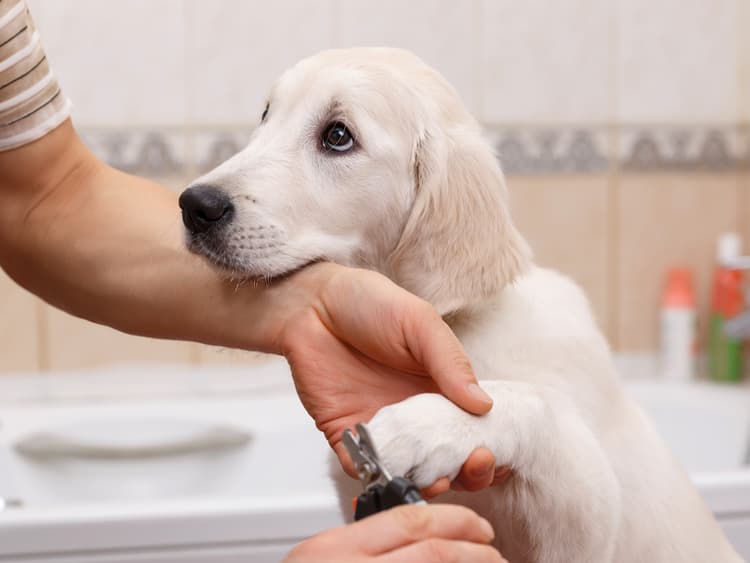
Nail trims may not top your dog’s list of favorite activities, but they’re an important part of keeping your pup comfortable. Overgrown nails can change how a dog walks, reduce traction, and contribute to joint discomfort over time.
There are several styles of dog nail clippers, including scissor-style and guillotine-style models. Whichever you choose, trim just a small amount at a time to avoid cutting the quick — the sensitive blood vessel inside the nail. If nail trims make you nervous, a veterinarian or groomer can either handle the job or show you how to do it safely.

Daniel de Andres Jimenez / iStock
Some dogs develop tear stains or collect dried discharge around their eyes, particularly light-colored breeds or dogs with prominent eyes, such as Pugs and Boston Terriers. Gentle eye wipes can help remove debris, reduce staining, and keep the area clean.
Only use wipes specifically formulated for use around dogs’ eyes, such as Earthbath Eye Wipes, and avoid rubbing directly on the eye itself. If you notice excessive tearing, redness, squinting, or persistent discharge, take your dog to the vet to rule out an underlying eye problem.

Wavetop / iStock
Healthy ears should be clean, dry, and free of strong odors. Regular ear cleaning can help remove wax, dirt, and debris, particularly in dogs with floppy ears, frequent swimmers, or breeds prone to ear infections.
Use a dog-specific ear cleaner, such as Zymox Enzymatic Ear Cleanser, rather than water, alcohol, or hydrogen peroxide — which can irritate the ear canal. If your dog has red, painful, or foul-smelling ears, skip the DIY cleaning and schedule a veterinary visit instead.

Capuski / iStock
Not every muddy paw calls for a full bath. Grooming wipes are perfect for cleaning dirty paws, wiping away drool, freshening up between baths, or removing pollen and other allergens after walks. They’re also handy after those outdoor adventures that leave your dog looking or smelling a little questionable.
If you’re trying to cut down on waste or save a few bucks, a damp microfiber towel works surprisingly well for everyday wipedowns, too.

Ignacio Villafruela / iStock
Dental care is one of the most overlooked parts of grooming, but it’s also one of the most important. Regular brushing reduces plaque and tartar buildup, freshens breath, and lowers your dog's risk of periodontal disease. Daily brushing is ideal, but even brushing a few times a week can make a real difference.
Always use toothpaste formulated for dogs, since human toothpaste often contains ingredients that aren’t safe for pets to swallow. If your dog is new to brushing, start slowly with short sessions and plenty of treats and praise. Dog dental kits, such as the Virbac Oral Hygiene Kit, include a toothbrush and dog-safe toothpaste to help you get started.

Svitlana Hulko / iStock
If you don’t have a removable shower head, a bath attachment that connects to your tub spout or garden hose can make bath time much easier. These tools rinse shampoo out of your dog’s coat more quickly while giving you better control over the water flow, so you’re not wrestling with a cup or handheld pitcher.
Some options, like the Aquapaw Pro Pet Bathing Tool, even combine a sprayer with a grooming brush, allowing you to scrub and rinse at the same time. They’re especially handy for dogs with thick coats.
Cruelty-free means the product and its ingredients weren’t tested on animals. It doesn’t necessarily mean it’s vegan, because some cruelty-free products still contain animal-derived ingredients, such as beeswax or lanolin.
Yes, as long as they’re made specifically for dogs. They can freshen your pup between baths, but avoid baby wipes or household wipes, which may contain ingredients that are harmful to dogs.
Most dogs don’t. If your dog has sensitive skin or allergies, though, a hypoallergenic shampoo made with gentle ingredients, such as oatmeal or aloe vera, may keep irritation to a minimum.
Some groomers avoid silicone because it can build up on the coat over time. It makes fur feel soft and shiny, but too much may weigh down certain coat types.
AKC Staff, et al. “How to Groom a Dog at Home.” American Kennel Club, www.akc.org/expert-advice/health/how-to-groom-a-dog.
“Dog Grooming Tips.” ASPCA, 2015, www.aspca.org/pet-care/dog-care/dog-grooming-tips.
“Dog Grooming Tips: How to Groom Your Pet at Home.” Best Friends Animal Society, 2025, bestfriends.org/pet-care-resources/dog-grooming-tips-how-groom-your-pet-home.

Katie Koschalk is a freelance writer based in Northern California. Fusing her love and knowledge of animals with her journalism degree and years of professional writing, Katie is dedicated to improving the lives of pets and their caretakers by sharing helpful and accurate information. When she’s not at her desk, you can find her exploring trails with her Aussie, Hunter, cooking plant-based meals, and talking to her two cats, Jax and Sadie, in really ridiculous voices.

Pet Wellness

Pet Wellness

Pet Wellness
Adoption Advice
Aside from keeping your dog pretty or handsome, grooming is an important part of maintaining their health. Here are some tips on knowing when your pup needs a little freshening up.

Pet Wellness
Here’s a 2026 price guide to help you budget for everything from a bath and blow dry to de-matting and nail trimming.

Breed Info
These low-maintenance breeds make great pets for busy professionals, first-time pet parents, and seniors.
Pet Wellness
And how to take the confusion out of which ones to use.