What’s a Good Feeding Schedule for My New Dog?
This may depend on your dog’s age and health, but it’s always important to set a routine.
This may depend on your dog’s age and health, but it’s always important to set a routine.
by Adrienne A. Kruzer, BBA, RVT, LVT, | October 8, 2025

Drobot Dean / Adobe Stock
Adopting a new dog, especially if you’ve never cared for one before, can be overwhelming. Learning about your dog’s personality, likes and dislikes, activity level, and other behaviors will take time, but one thing you can immediately do is create a feeding schedule. Depending on your dog’s age and health, feeding them at certain times each day will help you both get into a routine. This will not only help you remember to feed your new dog, but can also aid in house training.
TL;DR: Dogs more than six months old can be fed twice daily. Feed at consistent times to establish a routine and aid in house training. Always provide fresh water, and follow your vet's recommendations for portion sizes based on your dog’s size and age.
Once a puppy is weaned, a feeding schedule offers them consistency and helps you anticipate their potty needs. Regular mealtimes also remind you to feed your dog, especially if they mimic your own eating schedule. Dogs like consistency and aim to please, so setting food expectations early on will foster a positive relationship between you and your pup. If your adopted dog has a history of competing or searching for food, consistent routines can also help them become more food secure.
Although newborn puppies need to eat every few hours, adult dogs don’t need to be fed as often. Unless otherwise indicated by your veterinarian, you should feed your dog twice a day. More frequent feedings may be alright, but this can make your dog’s potty schedule difficult to accommodate. You are also more likely to overfeed your dog if you are offering them extra meals.
If you’d rather feed your dog once a day, some research indicates that this may be better for your dog’s health. But more studies are needed before recommending a once-a-day schedule for most dogs.
Since your dog is part of your family, the best times to feed them are usually around your own mealtimes. This schedule will not only prevent your dog from begging while you eat, but sitting down to eat is also a reminder to feed them. If your dog has special medical needs, you may need to plan their feeding schedule around the times you administer their medication. Some medications are absorbed best with food (and need to be given more often). Others, like insulin, must be given every 12 hours with a meal, which might not align with your mealtimes.

Dogs may love the idea of an all-day buffet, but free feeding isn’t doing them any favors.
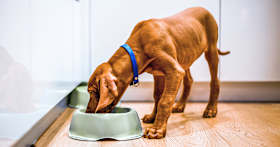
Very young puppies who are still nursing or are being bottle-fed need to eat every few hours. But if you aren’t caring for a neonate, you don’t have to worry about feeding your puppy quite as often. Puppies between six and 12 weeks of age should be fed four times a day, and puppies between 12 weeks and six months can be fed three times a day. Once your puppy is six months old, you can decrease meals to twice a day.
When you get a new puppy, create a feeding schedule that you don’t have to change too much as they grow. Although your puppy may eat more frequently than they will as an adult, try not to change the times of two of those meals. This way, when your puppy is old enough to go from four to three to two feedings, you are simply eliminating meals and not changing when they eat.
When your puppy is about six months old, you can switch them to an adult meal schedule. This may vary depending on your dog’s specific needs, though be sure to discuss feeding schedules with your veterinarian. Some small dog breeds, or those with health concerns, will need more frequent feedings.
Despite being the general recommendation, a twice-daily feeding schedule may not work for all pups. Depending on your dog’s age, activity level, body condition, and health issues, they may need more or less frequent meals and varying meal sizes. Additionally, if your dog regularly gets extra calories through treats or food dropped on the ground, you may need to adjust how much you’re feeding them at meal time.
Feeding your dog a complete, balanced diet is vital to keeping them healthy. But it’s not the only thing you can do to enhance their well-being.
Keep fresh water available at all times: Your dog needs to stay hydrated, so they need access to clean water throughout the day, not just at mealtime.
Avoid free-feeding: Many dogs don’t self-regulate and may overeat, becoming overweight. They may also eat a large amount of food too quickly and develop bloat or a life-threatening condition called gastric dilatation volvulus (GDV). It is also difficult to housebreak a dog who isn't eating at specific mealtimes.
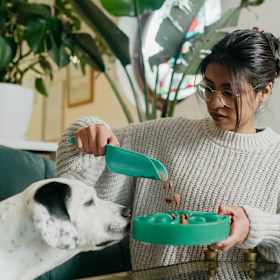
Use feeding as training time: Many dogs are very food motivated. Take advantage of this, and make mealtime double as training time.
Wash your dog’s bowl: Food and water bowls can harbor bacteria from your dog’s mouth. A substance called biofilm can build up from this bacteria and cause health issues, so regularly wash your dog’s bowls.
Measure your dog’s food: Since different foods contain different amounts of calories — and different dogs require different amounts of calories — measure your dog’s food to ensure you are feeding them the appropriate amount.
Monitor your dog’s weight: If you feed them too much or too little, they may become overweight or underweight. Purchase a baby scale for at-home use if you have a small dog, or visit your veterinarian for weight check-ins.
A good schedule for dog feeding meets their needs but also complements your life. When your dog wakes up in the morning, a potty break should be first on the schedule, but they’ll also probably want to drink some water and eat breakfast. Playtime may be next for some dogs, but shortly after breakfast, they’ll need to go potty again. Naps, more playtime, intermittent potty breaks, walks, and eventually another mealtime can be flexible throughout the day before bedtime, based on your schedule.
Most adult dogs should eat two times a day. But there’s nothing wrong with feeding your dog smaller meals more frequently throughout the day, if the meals and subsequent potty breaks fit into your schedule — and if you are monitoring their weight. Preliminary research shows that once-a-day feeding schedules for dogs may be healthier than two or three meals a day, but this should be discussed with your veterinarian until more research has been done.
Walking your dog before a meal is best if you are concerned about digestive issues. A leisurely walk after eating is not problematic, but too much exercise may contribute to your dog vomiting or developing bloat. If you need to walk your dog after they eat so they can go potty, make sure it’s a relaxed walk and not a run.
Knowing how much to feed a dog in each meal depends on how calorically dense your dog’s food is, how many meals you feed them, how many treats or other food they get throughout the day, and your dog’s specific calorie needs. If your dog is overweight or not very active, you may need to feed them less food than recommended to manage their weight. If your dog is underweight or highly active, you may need to feed them more food than recommended. Once you know the total amount of food your dog should eat in a day, divide it up evenly among meals. Your veterinarian can help you determine how much food your dog should eat.
“American Kennel Club.” American Kennel Club, 2017, www.akc.org/expert-advice/health/wash-dog-bowl.
“American Kennel Club.” American Kennel Club, 2017, www.akc.org/expert-advice/nutrition/feeding-your-dog-once-daily.
“Dog Bloat and a Hard Abdomen: Immediate Steps and Urgent Care Tips.” Garden State Veterinary Specialists, 2025, gsvs.org/blog/dog-bloat-hard-abdomen-urgent-steps.
Dr. Jeff Grognet, et al. “Bloat (or GDV) in Dogs — What It Is and How It’s Treated.” American Kennel Club, 27 Oct. 2022, www.akc.org/expert-advice/health/bloat-in-dogs.
Lowrey, Sassafras, et al. “Why Your Dog Needs a Routine at Every Stage of Life.” American Kennel Club, 26 May 2023, www.akc.org/expert-advice/health/why-your-dog-needs-routine.
Mansourian, Erika. “American Kennel Club.” American Kennel Club, 16 June 2016, www.akc.org/expert-advice/health/puppy-feeding-fundamentals.
“Raising Puppies.” Vca_corporate, vcahospitals.com/know-your-pet/puppy-raising.

Adrienne Kruzer is an accomplished veterinary technician and writer with over 15 years of hands-on experience caring for domestic and exotic animals.
Pet Wellness

Adoption Advice
Pet Wellness

Behavior & Training
Dogs may love the idea of an all-day buffet, but free feeding isn’t doing them any favors.

Shelters & Rescue
Having financial issues doesn’t mean you have to give up your pet. Here’s how to get help.

Behavior & Training
Behavior & Training
Is this actually possible, or an urban myth? We get the lowdown.

Behavior & Training
Is your dog staring you down while you eat? Learn when and how to set boundaries.

Adoption Advice
Help your underweight puppy achieve a healthy weight with these expert tips and feeding strategies.