Behavioral Challenges Common at Certain Dog Ages
Did your pup’s personality seemingly change on a dime? There’s a good chance they can grow out of it with a little help from you.
Did your pup’s personality seemingly change on a dime? There’s a good chance they can grow out of it with a little help from you.
by Karen B. London, PhD, CAAB, CPDT-KA, | August 31, 2026

San4ezz007 / Adobe Stock
It’s a crazy feeling when your puppy stops acting like a puppy, and you realize — gasp —you’ve got an adolescent on your hands. It’s just as weird when you realize you’ve raised a full-grown adult and (some degree of) calmness reigns. There’s a feeling of surprise again as they settle into middle age, but still age further and enter their golden years.
Dogs go through predictable behavior changes as they age. When we understand what’s happening and maybe even expect it, it feels a lot less stressful. Along with the normal developmental changes, there are also some common behavioral challenges that tend to show up at particular stages of life. They don’t affect every dog, but here are some common age-related issues that could impact the ones you love.

gradyreese / iStock
Puppy challenges are some of the most predictable ones. Most puppies challenge us in two main ways: Puppy mouthing is likely, and potty issues are practically inevitable.
When it comes to puppy mouthing, it helps to remember that puppies need to chew. They’re not gnawing on your hands to be annoying — they genuinely can’t help it. If your puppy mouths you, immediately stop interacting with them. Stop playing, stop petting them, stand up, and walk away. This teaches them the fun ends when they use their teeth on you. Give them plenty of appropriate things to chew on, and teach them to put their teeth on toys and not on you. Finding them good canine play buddies, perhaps through a puppy class, can also help.

Is your new pup biting everything? Learn effective ways to curb this behavior by teaching bite inhibition.
Potty training is the other big puppy hurdle. The good news is that dogs are actually naturals at this (unlike most other animals), which is one of many reasons dogs make good pets. (Dogs 1, monkeys 0.) Dogs naturally prefer to pee and poop away from where they spend their time eating, relaxing, and playing. The glitch? Their bodies need to mature for them to be able to hold it long enough to make that happen. Most get the hang of where to go quickly, but they can’t hold it for long periods yet. That means lots of trips outside. And I mean a lot. During active times of the day, this can mean every 10 to 15 minutes.
Puppy house-training 101 rules are simple. Your puppy should always be in one of three situations.
Outside with you, so they have a chance to pee and poop — and you can confirm they have gone before heading back inside.
Inside with constant supervision, meaning they are never out of your sight.
In a small, confined space (like a crate or laundry room), where they’re unlikely to pee and poop.
Other situations? During house-training, there aren’t any.

Samantha Gehrmann / Stocksy
If you’ve ever lived with an adolescent dog, you’ve probably wondered, “Where did my sweet puppy go?” And you have maybe even thought, “I don’t even know them anymore.” The best course of action is to get to know them because dogs are amazing when they are adolescents. They are, to be sure, distinctly different than the puppies they were, or the adults they will become, but amazing nonetheless.
Adolescents of every species tend to unfairly have a bad reputation, and that’s a shame. This stage is an exciting time full of growth, curiosity, and exploration. That said, teenage dogs can absolutely try your patience. Adolescent dogs often chew a lot. Like, nonstop. The best solution is to give them appropriate things to chew on, and lots of them.
They’re famous for their inattentiveness. You might notice they don’t respond to your cues as reliably as they did when they were puppies. That doesn’t mean they forgot all that training you worked so hard on. This is just a temporary blip as they become more independent and are more easily distracted.

Six tips and tricks to get your dog to listen to you.
At this stage, following an interesting scent might seem way more exciting to them than following you. They’re also learning about the world at an incredible pace, and a lot is competing for their attention. Sometimes you’ll win that competition, but accept that sometimes you probably won’t.
Another behavior issue that commonly occurs in adolescence is increased fearfulness. As many dogs approach their first birthday, they suddenly begin to spook easily, even in response to things that used to never bother them at all. A person with a rain poncho, a plastic bag blowing in the wind, or a trash can lying on its side might suddenly terrify them.
Dogs who have been quite chill and cheerful are not immune to this issue. Generally, dogs who were previously quite confident pass through this stage without any lasting effects, and return to earlier levels of confidence a few months later.

Turns out, adolescence isn’t just tough for humans—it can be hard on dogs, too.
To help your dog be one of those unscathed dogs, don’t force them to interact or move closer to anything that makes them upset. Stay calm. Keep things positive by associating what alarms them with great treats or toys. Don’t push them to deal with anything they can’t handle.
Honestly, the best advice about adolescence is to ride it out. “Patience” and “understanding” are two words to live by during this time. Yes, the challenges can be exhausting, but the joys are huge, too.
Their excitement about everything is contagious. Their enthusiasm, curiosity, and zest for life are captivating. Being around a dog discovering the world can be incredibly fun and inspiring, and for most people, it more than balances out the frustrating moments.

Gillian Vann / Stocksy
The most common age for aggression to appear is between 18 months and three years of age, which is sadly one reason so many dogs are surrendered to shelters and rescued at these ages.
A serious issue that sometimes crops up in late adolescence or early adulthood is aggression. Unfortunately, this issue does not generally resolve on its own. Working to improve aggressive behavior will likely be more successful with the help of a professional such as a Certified Applied Animal Behaviorist or a veterinarian who is board-certified in behavior.
Aggression that shows up even earlier is more concerning. (Similarly, we react differently to an eight-year-old committing a crime versus a teenager.) If your dog begins showing signs of aggression, it is important to consult with a qualified professional to give your dog the best chance to become the safest, happiest possible version of themselves.

thatsmrbio / Shutterstock
Adult dogs can also experience behavioral changes.
A common behavioral change in older dogs is increased sensitivity to loud sounds. Dogs who were previously unfazed by noise may start whining, panicking, or generally freaking out during thunderstorms or when they hear loud household noises (like a dropped pot or a slammed door). This change often appears around eight to 10 years of age.
In many cases, this sensitivity is linked to undiagnosed pain, particularly musculoskeletal pain. When a loud sound startles a dog, they will likely tense up or move suddenly. That can cause increased pain. They learn to associate loud sounds with more pain, leading to fear of such sounds, and perhaps also a fear of the places where they heard them.
Because of this connection, dogs who are sensitive to sounds, especially if they develop such sensitivity later in life, should be evaluated for pain. Treating the pain is essential to help such dogs overcome their fears.
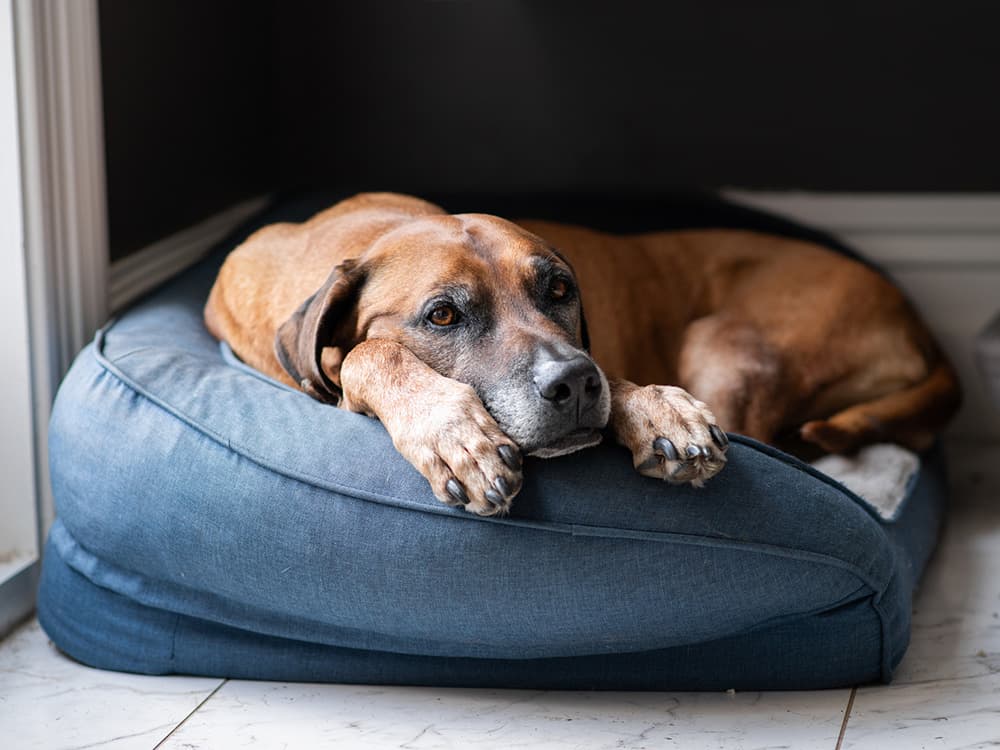
Gillian Vann / Stocksy
Advanced age leads to many physical changes that impact behavior. For dogs in their golden years (the gray hairs), here are some behaviors you might expect to see.
Dogs whose vision or hearing decline often become considerably more fearful than they do at any other time of life, simply because they’re startled more often. If they don’t detect someone approaching, a sudden touch can surprise them. Similarly, they may not realize someone new has entered the home until that person is very close. As fear so often plays a role in aggression, some senior dogs may behave aggressively even if they never did before.
Pain and fatigue become more common with age. Dogs dealing with discomfort or low energy may seem grumpier than usual or less interested in the physical affection they once loved. Helping them feel better can make a huge difference. Working with your veterinarian is important so you can explore treatment options and determine appropriate activity levels. Many older dogs benefit from things like super-soft bedding, gentle heat, or opportunities to move in water.

Learn about the signs, symptoms, and treatments.
Another condition to be alert to in senior dogs is canine cognitive dysfunction, also called dog dementia. This condition involves physical changes to the brain that affect a dog’s mental faculties. It is a neurological condition distinct from normal aging, though it mainly affects older dogs.
Dogs with canine cognitive dysfunction may exhibit a variety of behavioral symptoms. They may potty inside despite years and years of never doing so. They may stop responding to their name as well as other, well-known cues. They can struggle to learn anything new. Their sleep patterns may change, and they may wander at night. Many become less social and interactive. Some get disoriented, meaning they easily get lost in familiar places or get stuck in corners or behind furniture — unable to find their way out. This is a medical condition, and there are treatment options. But it’s common to ascribe these behavior changes to “just getting old,” rather than seeking help that can improve their quality of life.
Knowing which kinds of behavioral issues to expect, and understanding why they happen, makes them easier to handle. When we recognize the challenges that commonly appear at different stages of life, we’re also more able to determine when our dogs will benefit from professional help.
In most cases, the behavior problems dogs show at different ages aren’t random. There are usually clear developmental reasons behind them. Understanding those reasons helps us support our beloved dogs through every stage of life.

Karen B. London, Ph.D., is a Certified Applied Animal Behaviorist and Certified Professional Dog Trainer who specializes in working with dogs with serious behavioral issues, including aggression, and has also trained other animals including cats, birds, snakes, and insects. She writes the animal column for the Arizona Daily Sun and is an Adjunct Professor in the Department of Biological Sciences at Northern Arizona University. She is the author of six books about training and behavior, including her most recent, Treat Everyone Like a Dog: How a Dog Trainer’s World View Can Improve Your Life.

Behavior & Training

Behavior & Training
Adoption Advice

Behavior & Training
For a few months, adult dogs let puppies get away with anything. Then the free pass runs out — and that’s actually a good thing.

Pet Wellness
It’s like What to Expect When You’re Expecting, except add “four little paws to run around your house” to the title.
Adoption Advice
Wondering how old your dog is? We can help! Here’s how you can determine your dog’s age.

Adoption Advice
The right timing can make all the difference in your puppy’s growth and behavior.

Adoption Advice
Your new dog is going to sniff out every hazard in your house — here’s a room-by-room checklist to keep your new dog safe.

Behavior & Training
Vivian Zottola, MSc, CBCC, has all the answers (not to mention helpful dog-training tips) to transform your unhappy pooch into a calm, content dog.